Wild Pigs Canada Launches Latest Weapon in War On Swine
Introduced around the 1970s as livestock, wild pigs now roam free, destroying crops, contaminating water, and terrorizing Alberta’s farms.
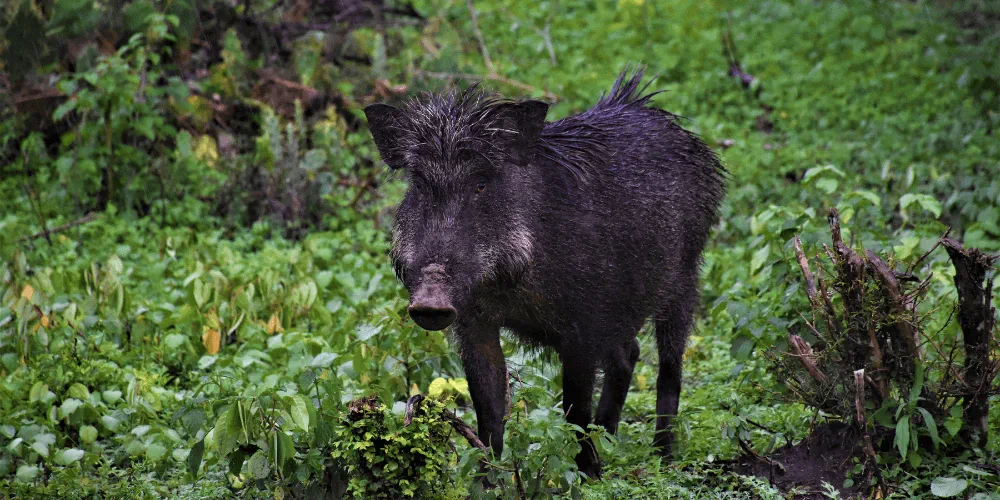
In some parts of Alberta, wild pigs hog the landscape. This invasive species wreaks havoc on farms and water supplies, and reproduces at an alarming rate.
To make matters worse, no one knows how many there are.
“Since 2018, Alberta has destroyed 367 pigs. If that is out of 450 pigs, that’s pretty successful. But if that’s out of 5,000 pigs, then we’re not doing so well,” Hannah McKenzie, Wild Boar Specialist for Alberta Agriculture and Irrigation told Canadian Geographic.
To help the fight against wild pigs, Animal Health Canada (AHC) and the Invasive Wild Pig Leadership Group recently launched the Wild Pigs Canada website.
According to AHC, the website will support the prevention, management, and removal of wild pigs by educating the public on the harmful effects of wild pigs in Canada.
The website aims to build a Canada-wide effort to control wild pig populations. It will track sightings and gather population data, bring more awareness to Canada’s wild pig problem, and help local efforts to remove pigs from environments.
It also contains information about what wild pigs are, what they look like, their effects on agriculture, the diseases they carry, and what Canada is doing to help.
Through the website, Wild Pigs Canada hopes to get a better handle on the pig problem.
Pigs cause more ham than good
Wild pigs have caused Alberta farmers grief for over thirty years.
Wild pigs aren’t native to Alberta. They were brought to Alberta from Europe as livestock back in the 1970s as part of an attempt to diversify agriculture.
At the time, there were no requirements for containment, so many of the pigs escaped and established their own wild populations across the province.
When the wild pig market collapsed in the early 2000s, farmers who couldn’t sell their pigs simply released them into the wild.
They became one of Alberta’s most notorious invasive species.
Is butchered management of wild pigs to blame?
Non-native species become invasive when they are able to out-compete an ecosystem’s native species.
Such is the case with wild pigs.
They reproduce at an incredibly fast rate, typically starting before they are a year old. They can have up to twelve offspring a year.
“Wild pigs are able to survive and thrive in a wide range of environments and climates. They are omnivores, very adaptable and are able to rapidly expand their range into unoccupied areas,” said Ruth Aschim, a PhD student at the University of Saskatchewan, in a news release.
These animals are another thorn in the side of farmers, who already struggle with drought, soil erosion, labour shortages.
Farmers have reported wild pigs raiding their farms, frightening and scattering livestock, destroying crops, and eating hay bales and grain farmers rely on to feed their livestock.
Wild pigs also trample native plants and soil. They can contaminate water supplies, and carry diseases that can be transferred to livestock.
They cost billions a year in control and damages.
Changes afoot
Thankfully, efforts are being made to curb wild pig populations in Canada, like the Wild Pigs Canada website.
Wild pig farms are also inspected annually to make sure they meet a minimum containment standard, and some municipalities have enacted bylaws to ban new wild pig farms or limit the expansion of existing ones.
Understanding the threat wild pigs pose to Alberta’s agriculture and reporting any sighting is one of the best tools in reducing and controlling wild pig populations.