Whitebark Pine Is A Symbol Of Hope In The Jasper Wildfire Aftermath
Rebuilding after the Jasper wildfire is an opportunity to bring back one of the Alberta Rockies’ endangered trees.
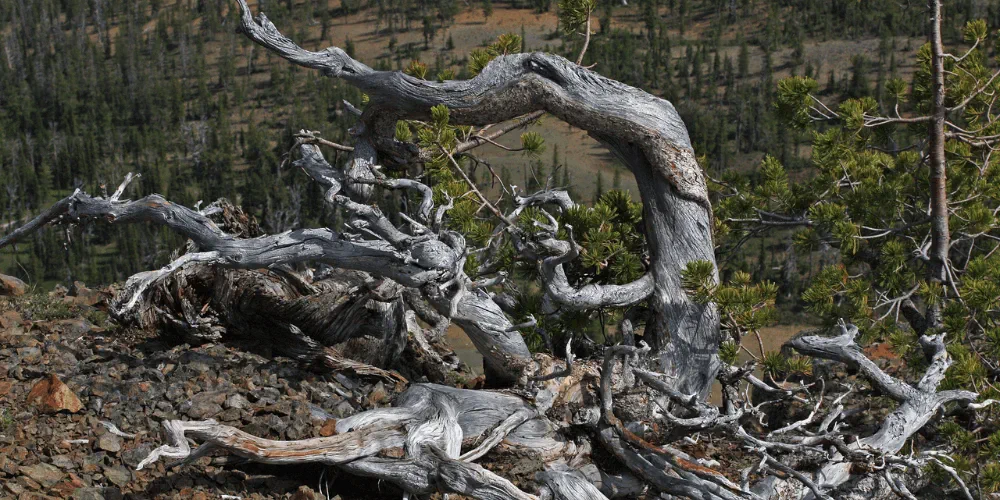
Within the ashes of 2024’s devastating Jasper wildfire is an opportunity to help recover the whitebark pine, a struggling tree.
The fire scorched 33,000 hectares of forest in Jasper National Park, an area half the size of Edmonton, and destroyed more than 350 properties in the historic Jasper townsite.
It will take years for Jasper, its citizens and the surrounding ecosystem to recover. Still, people are coming together to get nature back on its feet, and even help some species become more present than they were before the fire.
The process of recovery started quickly. Last September, while the fire still smoldered in some places, crews were already planting Douglas fir seedlings near wetlands, popular trails and erosion-prone slopes.
Parks Canada is also reforesting certain areas with whitebark pine, which is listed as endangered under Canada’s Species at Risk Act.
Wildlife love whitebark pines
The whitebark pine is a key species in the Alberta Rockies. Their seeds are loaded with nutrients. Squirrels and grizzlies love them. They’re also the Clark’s nutcracker’s main food source.
These birds are the pine’s primary seeder. They collect and stash the seeds for food, dropping some of them along the way. This naturally regenerates whitebark pines in the mountains.
Climate change, blister rust, mountain pine beetle, and historical fire suppression are to blame for the tree’s decline.
The tree grows well on rocky slopes and in tough conditions. Parks Canada Resource Management Officer Nicholas Kai says the Jasper wildfire is a chance to help bring this tree back.
“Burned areas are like a blank canvas for whitebark pine restoration. With little other vegetation, the seedlings can grow quickly in the nutrient-rich soil,” said Lai in a media release.
Lai, who is part of whitebark pine restoration efforts in Jasper park, assessed the burn and found suitable burned sites in areas Hardisty and Signal Mountains. The lack of competing plants remaining in the burned forest, means seedlings have a decent chance of surviving.
Big plans for whitebark reforestation
Parks Canada hopes to plant 20,000 whitebark pines every year, with a target of 150,000 in the ground by 2031.
It’s a large and labour-intensive project. First, people have to climb mature and healthy whitebark pines to harvest the seeds.
“We break apart cones by hand, pulling seeds from the sticky sap and cone scales one at a time,” Lai explained.
The seeds are then cleaned and taken to a nursery, where they are grown into blister rust-resistant young trees. After several years in the nursery, the seedlings will be ready for replanting in the Jasper burn.
Sun-exposed planting sites are chosen carefully and at the right elevation. Burned logs and stumps protect the young trees.
“These trees are a symbol of resilience. By planting them now, we’re not just restoring what was lost, we’re building a stronger, more diverse ecosystem for future generations,” Lai said.
The Clark’s nutcrackers will definitely be happy.