Put Your Phone Away! Parks Canada Implements No-Stopping Zone To Protect Nakoda
Parks Canada has implemented strict measures, including a no-stopping zone and reduced speed limit, to protect Nakoda and her cubs
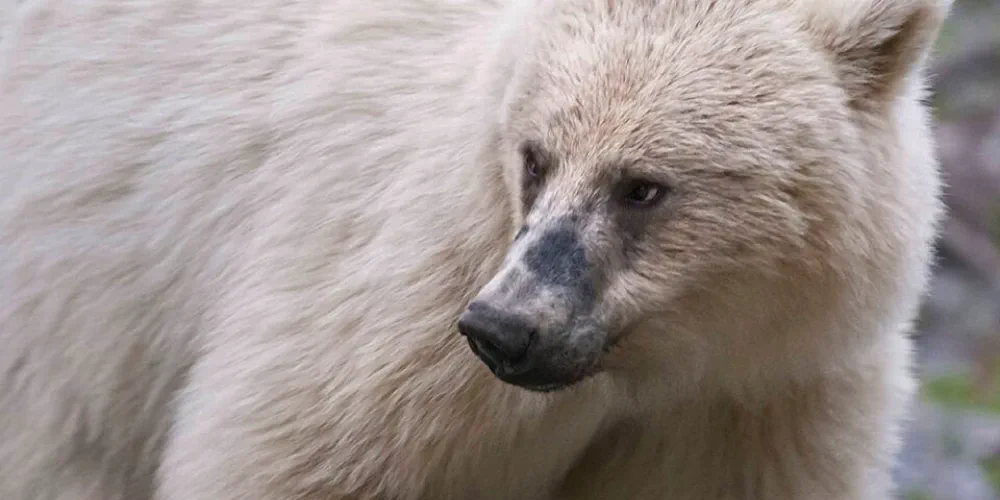
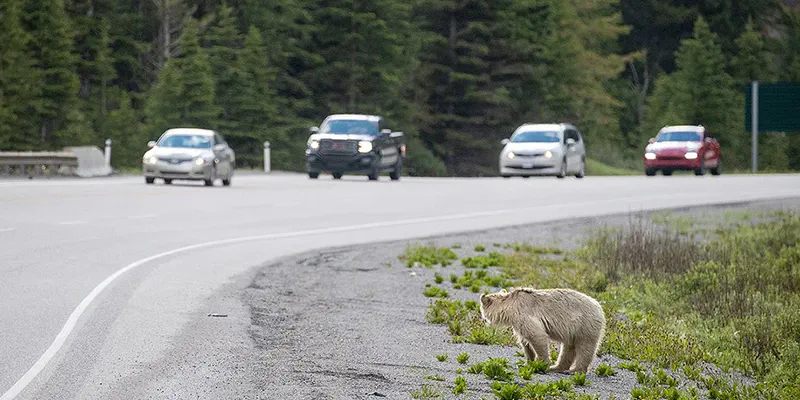
Nakoda, a white-coloured grizzly, is making headlines again after being spotted for the first time this season.
Nakoda is a seven-and-a-half-year-old grizzly bear famed for her white fur coat and impressive acrobatics skills.
A year ago, she made headlines after climbing over a wildlife fence to reach delectable dandelions on the side of the Trans Canada Highway.
We get it. A delectable fresh spring salad is always worth the extra effort!
Although Nakoda is a white grizzly, she is not albino.
Albinism is caused by the mutation of certain genes that causes the body to produce little or no melanin.
Melanin is a substance in the body that produces hair, eye, and skin colour. Humans and animals with albinism are defined by their light skin, hair, and eyes.
A trait that is exclusive to albino animals is red eyes, which Nakoda lacks. Her fur also is not purely white.
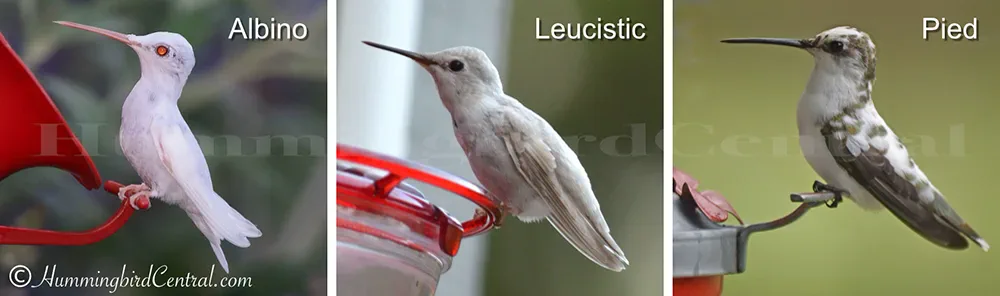
There are three types of genetic mutations that result in white colouration: albino, leucistic, and pied. This image uses hummingbirds to show the difference between the three mutations | Hummingbird Central
An Appetite for Dandelions
Nakoda emerged from her den this year with more than just an appetite.
She was accompanied by her two brown-coloured cubs.
The happy family again headed to the side of the Trans Canada Highway to feast on dandelion salad, prompting Parks Canada to take immediate action to protect the bears.
The agency implemented a no-stopping zone and reduced speed limit along the ten-kilometre stretch of highway between Yoho Valley Road and Sherbrooke Creek in Yoho National Park.
Penalties for violating the no-stopping zone range from a $115 ticket to a mandatory court appearance and a maximum fine of $25,000.
Motorists must reduce their speed to 70 kilometres per hour, and violators who drive more than 40 kilometres per hour above the posted limit could have their car impounded.
Parks Canada’s actions might seem excessive, but they are warranted.
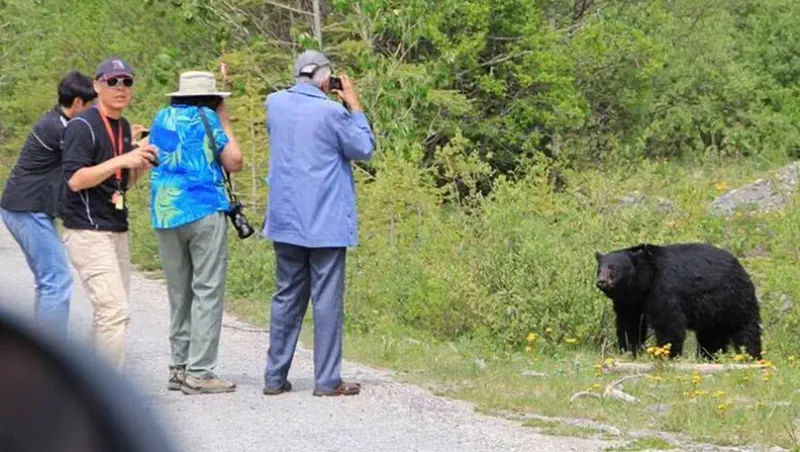
When Nakoda was first seen by the public in 2020, people got out of their cars to take pictures of the rare bear, causing a ‘bear jam’ and traffic safety issues.
Nakoda’s latest appearance has attracted the attention of social media influencers looking to capitalize on the rare bear’s blonde fur to generate viral views.
A video of Nakoda and her cubs posted online by a local influencer received almost 70,000 views in less than 24 hours.
If Nakoda had a social media feed, she would be as popular as Taylor Swift!
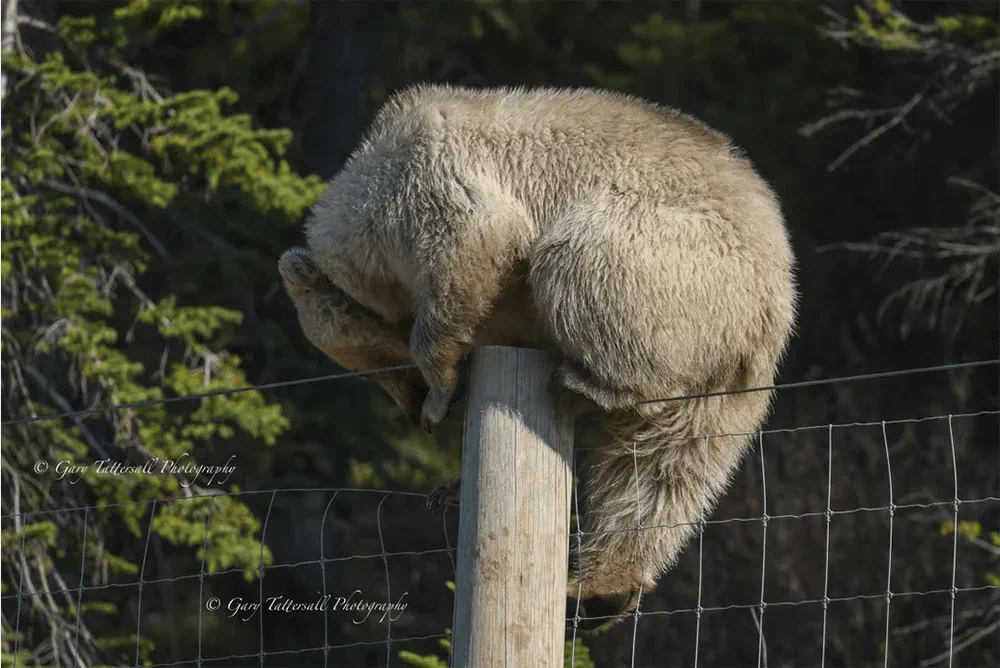
Nakoda showing off her acrobatics to climb a fence | Gary Tattersall | CBC News
Praise And Concern
Canmore-based wildlife conservation photographer John E. Marriott praised Parks Canada for acting immediately to protect Nakoda and her cubs.
In addition to being white, Nakoda is the only young reproducing female grizzly bear in the Lake Louise grizzly population.
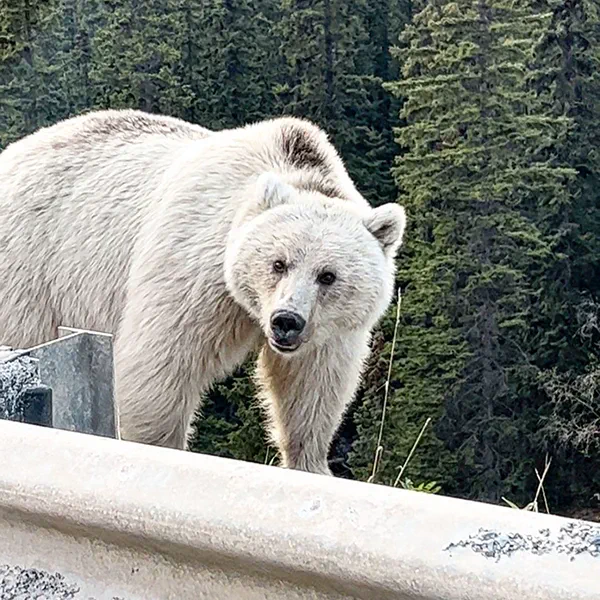
A motorist takes a photo dangerously close to Nakoda on the side of the highway | ladypruna | Reddit
“…it is critical that Parks does everything in their power to keep her alive and on the landscape, so I’m really glad to see them being proactive like this,” Marriott told**Rocky Mountain Outlook.
Marriott hopes the agency will monitor the bears around the clock, especially during daylight hours.
“I hope they are able to also provide a Parks Canada escort at all times she’s near the road from dawn to dusk and even at night, if at all possible, and I also hope that the RCMP is able to regularly patrol the no-stopping and 70-km/h zones,” said Marriott.
Marriott praised Parks Canada, but he is concerned about Nakoda’s fame on social media.
“I get that these influencers realize that the videos may get them a lot of views and up their influence even further, but at what cost to Nakoda and those little cubs?” asked Marriott.
Nakoda’s appearance will surely attract influencers, photographers, and wildlife enthusiasts to the area.
Even if motorists can’t legally stop their cars, the increased traffic hoping to see the bears increases the risk of Nakoda or her cubs being struck by a vehicle.
Being surrounded by people also creates a high-stress environment for the bears. Would you be able to eat in peace if people constantly watched and took photos of you?
Not to mention, approaching a female grizzly and her cubs is practically a death sentence. One study found that 70 percent of fatal grizzly bear attacks involved a mother defending her cubs.
Marriott explained that although he makes a living photographing wildlife, he won’t be trying to snap a photo of Nakoda and her family, and he encourages others to do the same.
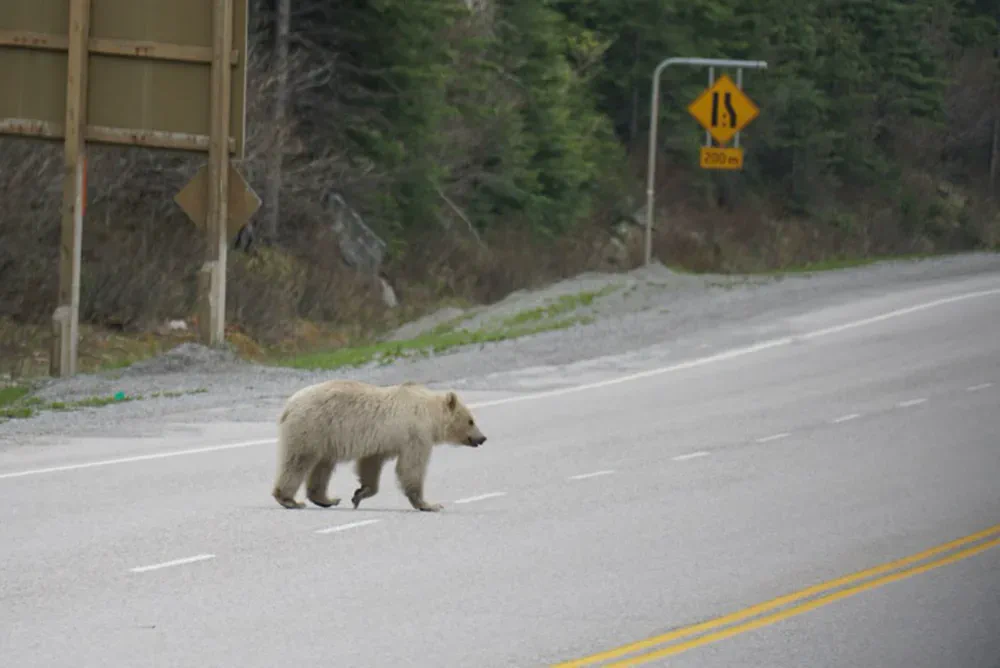
Nakoda dangerously crossing the highway | Parks Canada | Rocky Mountain Outlook
Ultra Rare
A white polar bear is a dime a dozen, but a white grizzly bear is almost unheard of.
Nakoda is a rare and unique symbol of our province that needs to be protected.
Nakoda is rarer than a spirit bear, which refers to a black bear with a gene that causes white fur instead of black.
Spirit bears are found in British Columbia’s Great Bear Rainforest, where as many as 400 spirit bears live.
According to the North American Bear Center, only about one in a million black bears are white outside of British Columbia.
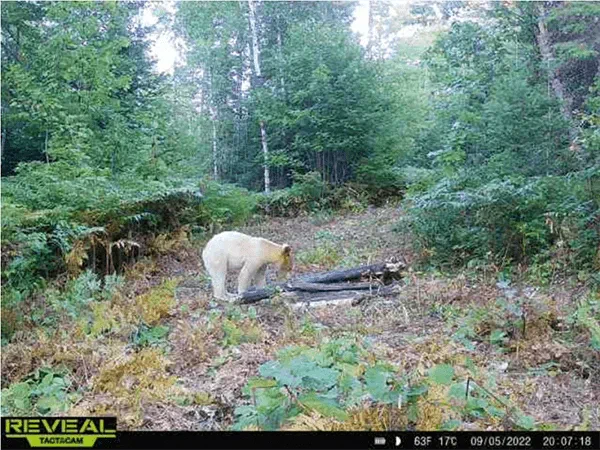
The one-in-a-million spirit bear spotted in Michigan, United States | MLIVE
This statistic is even more shocking when we consider that the global population of black bears is estimated at only one million.
The first reported spirit bear outside British Columbia was probably in Michigan in 2022.
By comparison, Nakoda’s rarity makes spirit bears seem almost commonplace.
There isn’t enough white grizzly bear population data to estimate Nakoda’s rarity.
If Nakoda were a trading card, she would be worth a pretty penny. However, she doesn’t exist for our pleasure or profit.
She is a shining icon in our province’s rough and rugged landscape that speaks to the wonder of Alberta’s wildlife.
A no-stopping zone and reduced speed limit will go a long way toward protecting Nakoda and her cubs, but Parks Canada can only do so much.
Albertans must also do their part to ensure that Nakoda and her cubs can safely eat dandelions to their hearts’ content.
Obey speed limits, do not stop, and if you slowly cruise past Nakoda and her cubs count yourself extremely lucky – maybe it’s time you buy a lottery ticket as well!