Alberta’s 2024 Wildlife Management: A Year of Controversial Decisions
Alberta’s policies increasingly prioritize hunting and trapping interests over ecological science, leaving Albertans questioning the future of its wildlife populations
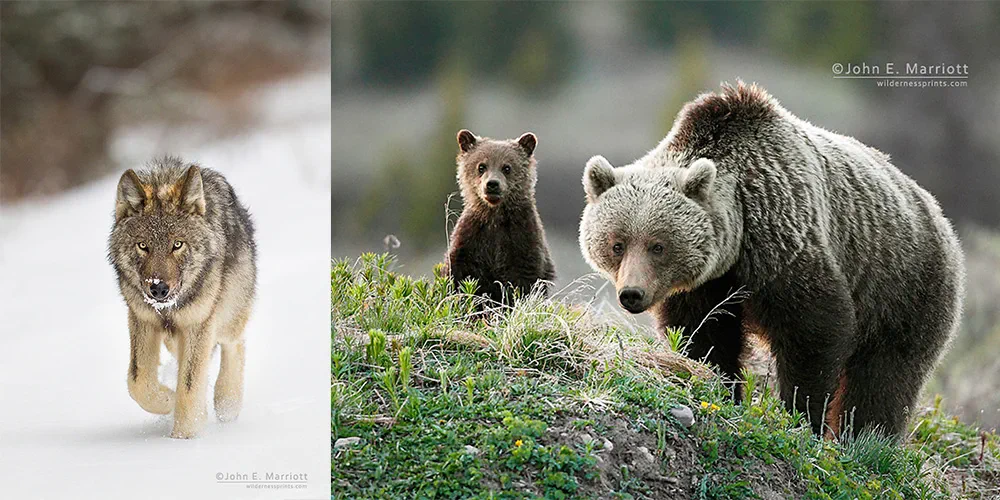
As we wrap up 2024, it’s time to look at Alberta’s wildlife management policies this year.
Science-based decisions and public consultation should be at the forefront of wildlife conservation. However, the province’s approach has taken a different path, leaving many conservationists and wildlife advocates scratching their heads.
Grizzly Bear Hunting: A “Solution” to Problem Bears?
In a move that has raised eyebrows across the conservation community, Alberta reintroduced grizzly bear hunting on June 17, 2024, after an 18-year ban.
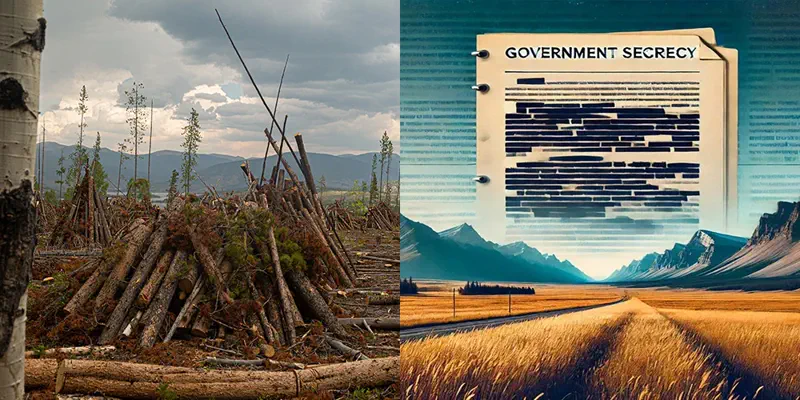
This change wasn’t ‘publicized’ until June 29 (the Saturday of the Canada Day long weekend), when it was published in the Alberta Gazette. This government publication doesn’t exactly make the rounds at the local coffee shop.
When some intrepid sleuths finally noticed the change buried over 300 pages deep in the document on July 5, the news spread like wildfire.
Alberta’s solution to “problem bears” is not to enlist the expertise of biologists and conservation officers to come up with solutions, but instead, the province will call up a posse of ‘eligible hunters’ to have the opportunity to ‘take care of the problem.”
What is this, 1880?
Critics argue that this approach oversimplifies human-wildlife conflict and potentially threatens the recovery of a species listed as threatened just a decade ago.
Sarah Elmeligi, Banff-Kananaskis MLA and a bear biologist herself, said of Todd Loewen,Minister of Forestry and Parks, “He’s fear-mongering Albertans and painting this picture that there’s also these bloodthirsty grizzly bears running around the landscape, killing people and eating things, and that is, frankly, just not the case.”
One can’t help but wonder if this is genuinely about wildlife management or catering to a small group of trophy hunters.
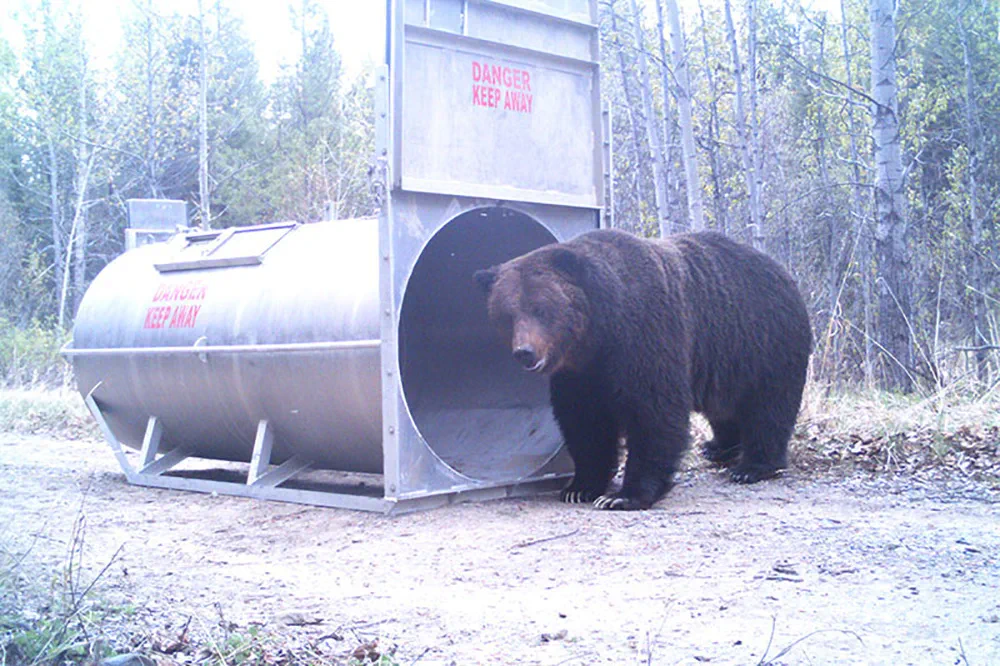
“Problem bears,” which are wholly a human-created situation, will not be dealt with by professional wildlife managers but instead be handled by hunters selected from a pool created by Forestry and Parks Minister Todd Loewen | FRI Research
Cougar Hunting in A Provincial Park
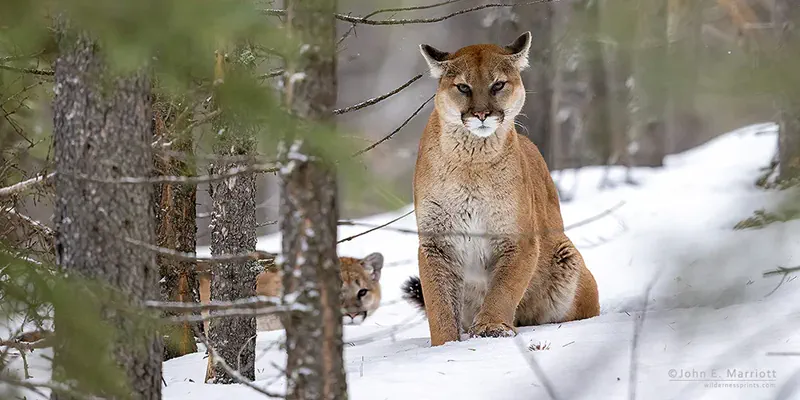
Alberta approved cougar hunting in Cypress Hills Provincial Park in another surprising move.
Are cougars wreaking havoc and eating pets and livestock in Cypress Hills? Or is the population of cougars too large for the land’s carrying capacity?
Nope!
Cougars were once hunted out of the Cypress Hills and only started returning in the 1990s. It was only in 2006 that a breeding population in the park was confirmed.
Ironically, the province had previously opened up hunting of Elk in Cypress Hills Provincial Park because the elk population was expanding due to few natural predators in the park. Cougars could help with the elk problem, but the government, in its wisdom, also opted to open up cougar hunting in the park.
Say what?
Trophy hunting cougars often leads to more wildlife/livestock problems because Cougar hunting targets large, healthy and mature cougars, allowing smaller and weaker cougars to survive that will look for ‘easier’ prey to capture like livestock.
Like the grizzly bear hunt, the government quietly made these changes without consultation, press releases, or public input, and Minister Leowen often does not respond to news outlets’interview requests.
This has many people, including the general public, up in arms. Jasper Local contributor and former JNP biologistMark Bradley wrote, “If you want to erode trust among Albertans, you don’t bother consulting them before locking and loading your Ministerial pen.”

Todd Loewen, who was kicked out of the UCP caucus under Jason Kenney, was quickly embraced by Danielle Smith once she took office in 2023 | True North News
Elk Farm Trophy Hunting
The province is thinking of allowing trophy hunting on elk farms in 2025.
You know, prove you are a man by hunting down penned and semi-domesticated animals.
The move blurs the lines between wildlife conservation and livestock management.
Not only does the practiceraise ethical concerns and degrade the practice of sport hunting, it potentially impacts wild elk populations through disease transmission and genetic pollution.
One must question whether this decision was made with the best interests of wildlife in mind or simply to boost the profits of elk farm owners who have lobbied for farm hunts for years.
Kill Wolverines To Study Population Size
In what can only be described as a perplexing decision, Alberta has lifted wolverine and (lynx, fisher, and river otter) trapping limits under the guise of determining population size.
You know, determine the population of wolverines in the province, a species of concern, not through a population census like DNA hair sampling or aerial track surveys, which keep wolverines alive, but instead by trapping as many as possible.
This approach to wildlife research is counterintuitive and potentially devastating.
Wolverines, known for their low reproductive rates and sensitivity to human disturbance, could face significant population impacts from increased trapping.
It’s challenging to comprehend how increased killing of a species can be justified as a method for studying its population.
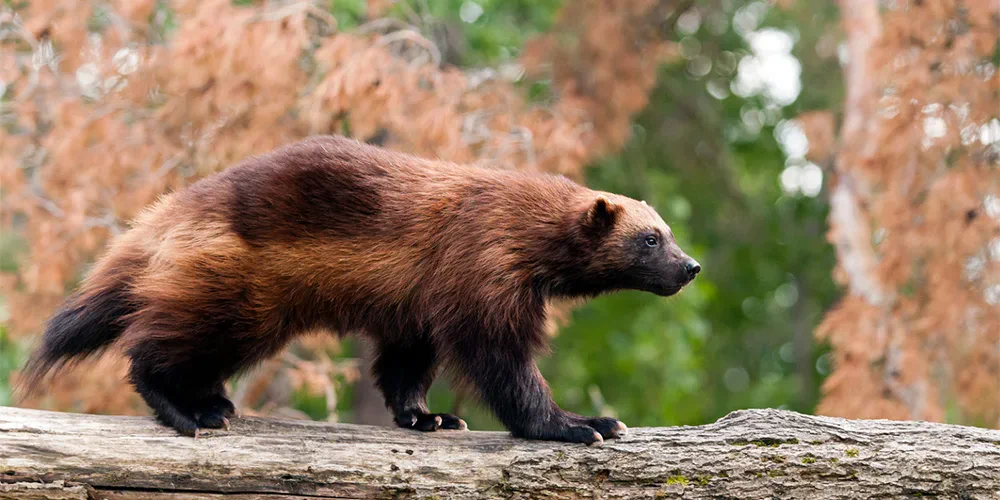
A wolverine | Nazzu
Wolf Killing Contests
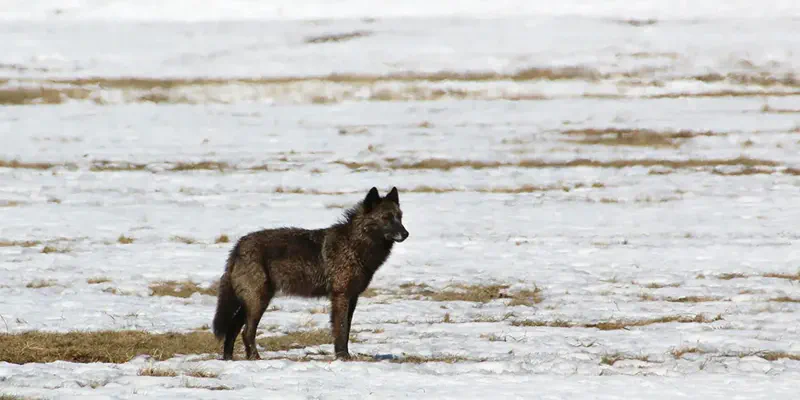
The province is condoning a province-wide wolf trapping and killing contest with big cash prizes.
The Alberta Trapper’s Association and the Alberta Professional Outfitters Society have launched a province-wide trapping and killing contest. The contest started October 1st and is intended to encourage killing as many wolves as possible this winter. There is no limit on the number of wolves that can be killed. Hunters get $250 for every wolf pelt they submit, while the ‘best’ wolf skin wins $5,000.
They call it a “contest,” but it is nothing less than a bounty (“a sum paid for killing or capturing an animal”).
Study after study shows that bounties are not effective tools in managing predators.
That’s why bounties for wolves ended in the rest of Canada over 50 years ago. Despite the lousy track record,bounties were reintroduced in Alberta in 2007 to control wolf numbers and reduce the depredation of livestock and wild ungulates.
The latest wolf-killing contest is dubbed theAlberta Ungulate Enhancement Program; the program and contest aim to “enhance ungulate populations in the Province of Alberta.”
In other words, kill wolves to keep populations of deer, moose and elk abundant (for hunters).
And so it goes. Fire up the pickups, grab your guns, and let’s go manage our wildlife!
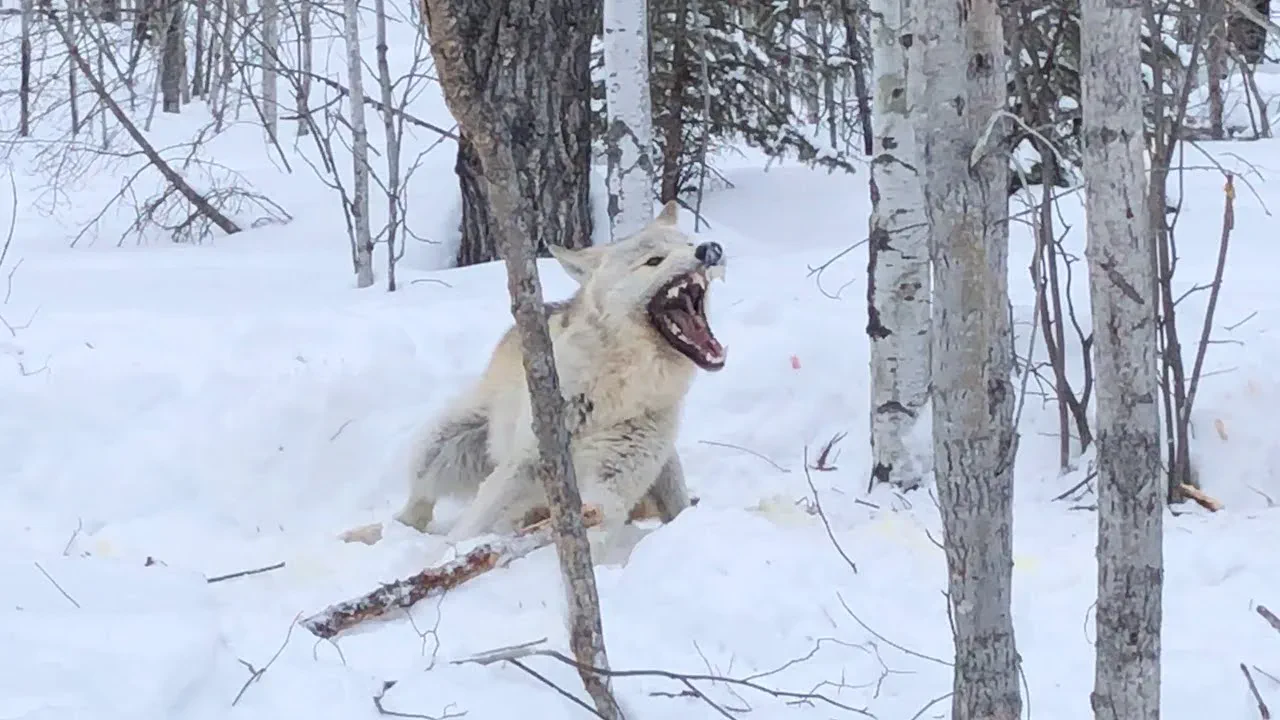
A wolf caught in a leghold trap | TyTan Ventures | Youtube
Guns, Traps, and Forgotten Science
Looking at the overall trend in Alberta’s wildlife management policies this year, one can’t help but notice a disturbing pattern. Science-based decision-making and public input have taken a backseat to policies favouring hunters and trappers. From grizzly bears to cougars, elk to wolves and wolverines, the province’s approach appears to prioritize short-term gains for a small group over long-term conservation goals.
As we look towards 2025, one can only hope that Alberta will reconsider its approach to wildlife management (highly doubtful, given that a trapper and hunter is in charge of the portfolio).
The province’s rich biodiversity deserves policies grounded in sound science, ecological understanding, and genuine public consultation. Without a significant shift in perspective, we risk compromising the very wildlife populations these policies claim to manage.
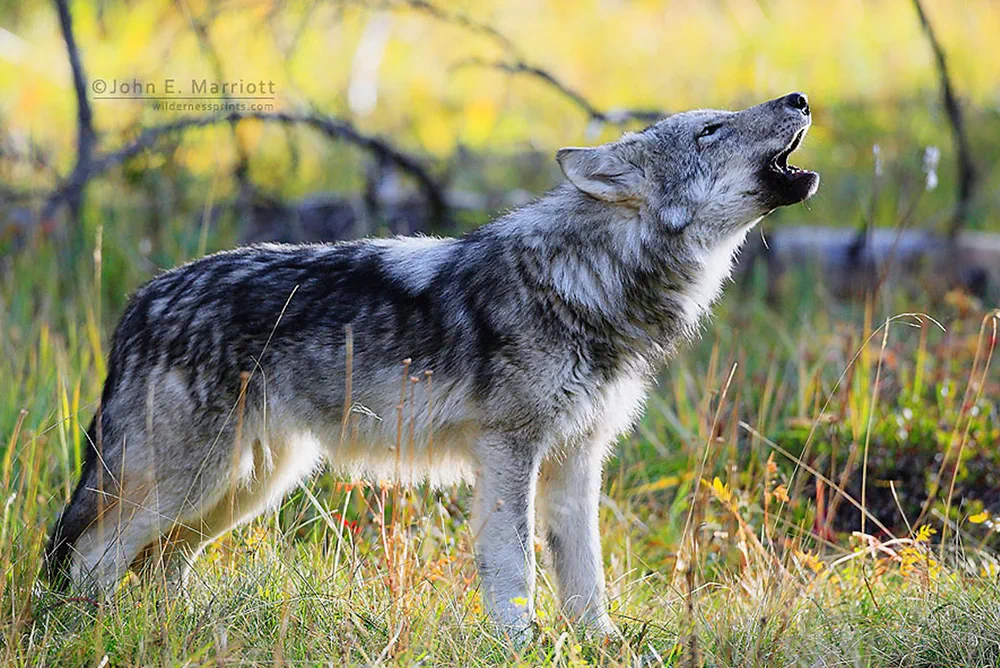
Wild gray wolf pup howling | John E. Marriott | Wilderness Prints