Alberta Ends State Of Emergency
Wildfires have burned over 1.2 million hectares this year, breaking a 40-year-old record

On Saturday, the province ended its state of emergency, which was declared on May 6, due to the ongoing wildfires, but many communities are still being evacuated.
“…the overall wildfire situation has improved, and it’s improved significantly, and we anticipate that it will continue to improve,” Mike Ellis, Public Safety and Emergency Minister, said during an update.
Ellis said that they will keep fighting the wildfires and supporting the evacuated communities, even though the state of emergency is over.
He also mentioned that they don’t think there will be a need for another state of emergency, but they will consider it if the situation requires it to keep everyone safe.
During the past month, over 38,000 people had to leave their homes because of the wildfires. As of Saturday, more than 4,000 people remain evacuated.
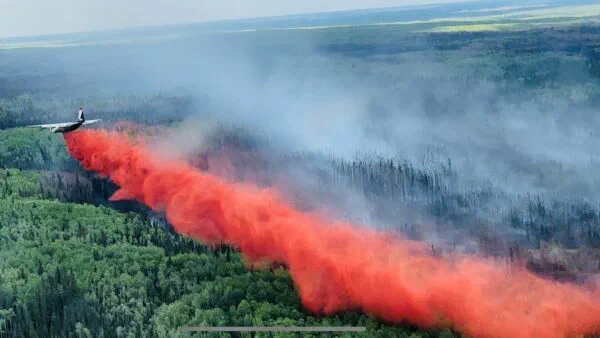
The Rocky River fire at Chipewyan Lake | CFWE Radio
This week, the Rocky River fire caused the evacuation of Fort Chipewyan, including the Mikisew Cree First Nation, Fort Chipewyan Metis Nation, and Athabasca Chipewyan First Nation.
The fire is still not under control and covers an area of almost 22,000 hectares. Christie Tucker, an information unit manager from Alberta Wildfire, said the fire is still a big concern.
Firefighters are working to stop it from spreading toward the community, and they expect some rain in the area, which will help with the fight against the fire.
“Firefighters and helicopters have been working on reinforcing containment lines, assisted by air tankers and we’re expecting some rain in that area over the next day or so which will certainly help the fight,” said Tucker.
Dene Tha’ First Nation (Chateh), Fox Lake, Chipewyan Lake, and Sturgeon Lake Cree Nation Area 4 are also under evacuation orders because of wildfires near their communities.
Right now, six local emergencies and five band council resolutions are in effect. On Saturday, there were 58 wildfires, and 15 of them were out of control, according to Tucker.
So far this year, there have been 563 wildfires that burned almost 1.2 million hectares. Of those, 504 fires have been put out, which is 90 percent.
This year, we have surpassed the record of one million hectares burned, which hasn’t happened in over 40 years.
Tucker mentioned that this has been an extraordinary wildfire season. The warm weather and strong winds in April caused the fires to spread quickly before the trees and vegetation turned green, making us more vulnerable to wildfires.
Seventy-two wildfires were caused by lightning, and 305 were caused by humans. The cause of the remaining fires is still being investigated.