White-Nose Syndrome Continues To Threaten Alberta’s Bat Population
The disease forces bats to expend their hibernation energy looking for food in the winter, an impossible task
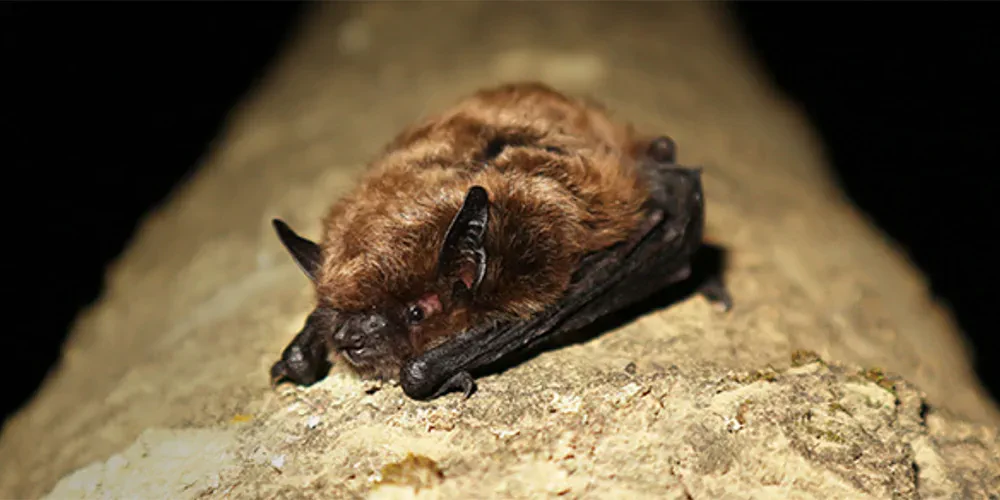
Bats with white noses are showing up in Alberta, not because they had a wild night out.
Pseudogymnoascus destructans, better known as white-nose syndrome, was confirmed in Alberta earlier this year, causing trouble for our province’s bat population.
White-nose syndrome is a disease that affects bats and is caused by a fungus found in caves where bats hibernate.
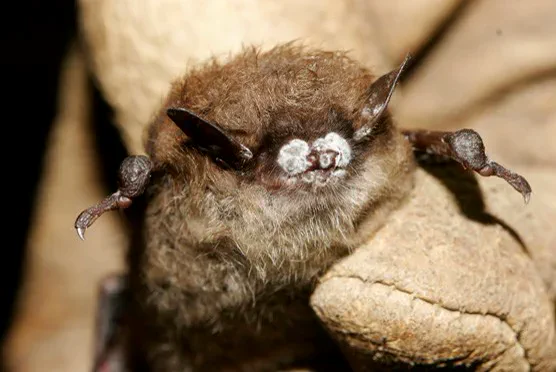
A Little Brown Bat with white-nose syndrome | von Linden | National Park Service
The disease often appears as white fuzz on a bat’s nose, which is how it got its name. A bit of fuzz might sound harmless, but white-nose syndrome is deadly.
White-nose syndrome attacks the skin of bats while they hibernate. Hibernation is an important process for bats and many other animals.
Little Brown Bats, or Myotis lucifugus, is the most common bat species in Alberta and Canada. These bats consume about 1,000 insects per night, which is half their body weight.
Before entering hibernation, Little Brown Bats eat enough insects to increase their weight by over 30 percent.
That’s the equivalent of a human weighing 175 pounds having to gain 50 pounds over the summer. That would take a lot of ice cream and pizza to make that happen!
Bats consume more food before hibernation to ensure they have enough energy to survive through the winter (humans don’t have that excuse, however!)
While hibernating, bats reduce theirmetabolic rate, which is the amount of calories their body consumes to survive, and lower their body temperature.
These actions reduce the amount of energy bats use during hibernation, saving them from having to forage for food or migrate somewhere warmer during the winter.
White-nose syndrome causes bats to wake up frequently during hibernation, which causes infected bats to consume valuable stored energy twice as fast as healthy bats, according to astudy published in BMC Physiology.
The disease forces bats to expend energy looking for food in the winter, an impossible task when many of the flying insects bats rely on for food during the warmer months aren’t available such as moths and beetles.
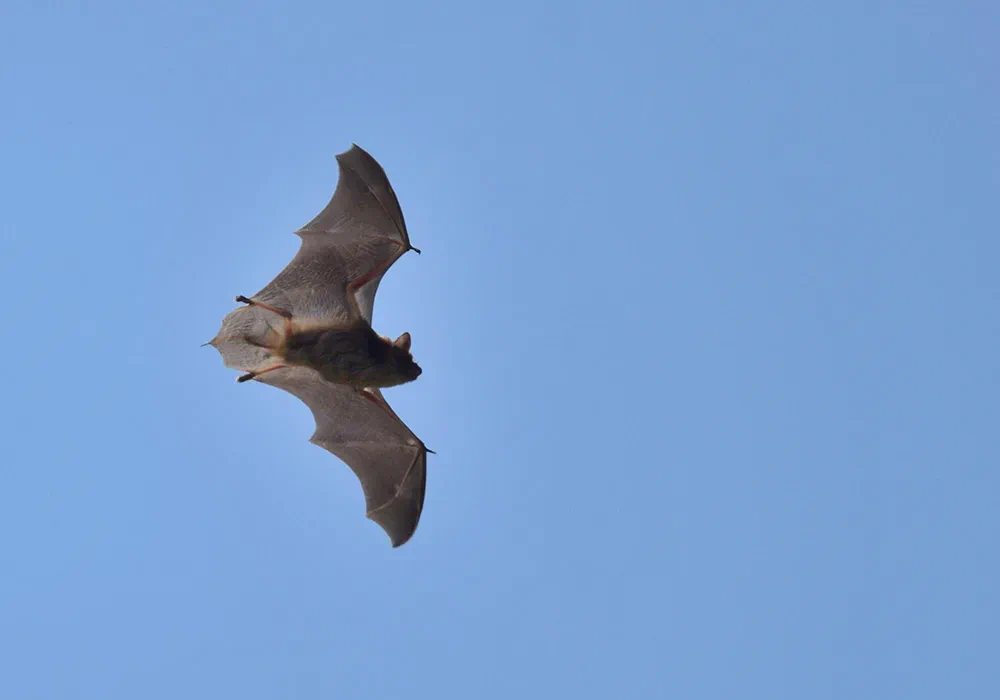
White-nose syndrome causes bats to do strange things like flying outside in the daytime during winter | Wikimedia Commons
Trouble On The Horizon
White-nose syndrome was firstdiscovered in New York in 2006. Since then, the disease haskilled oversix million bats across North America.
The disease is so deadly that it has killed90 to 100 percent of some bat populations. What makes white-nose syndrome so fatal is the disease’s ability to rapidly spread.
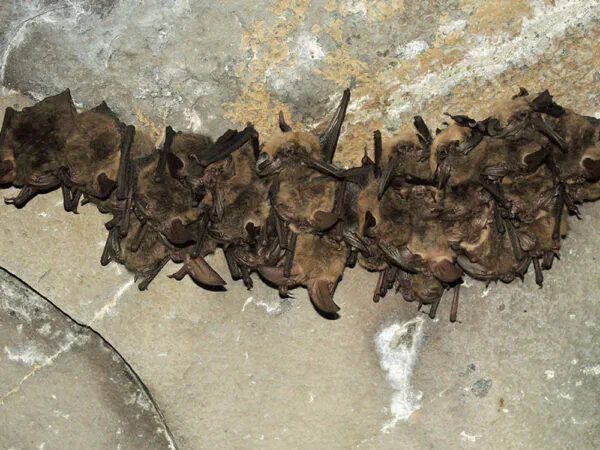
A colony of little brown bats huddled together in a cave | Shawn Thomas | National Park Service
In addition to the fungus occurring naturally in the caves where bats hibernate, the disease can spread via physical contact.
When some bat colonies hibernate, they huddle together in large groups to stay warm, making it easy for white-nose syndrome to spread like fire in a paper mill.
All it takes is one bat with white-nose syndrome to potentially wipe out an entire colony.
Like a tidal wave, the disease has spread west across Canada and the United States at about200 to 900 kilometres per year.
According to the White-Nose Syndrome Response Team’s 2023-2024 data, 40 states and nine provinces now have confirmed cases of white-nose syndrome in bats.
The fungus that causes white-nose syndrome was found in bat poop samples from a few locations insoutheastern Alberta in 2022 and again in2023 so researchers suspected the disease in the province.
White-nose syndrome was confirmed for the first time in Alberta inMay 2024. Wildlife Conservation Society (WCS) researchers discovered the disease in two Little Brown Bats at different sites along the Red Deer River.
“If the disease causes the same impacts as in eastern North America, then we could be looking at a catastrophic die-off of our most common bat species,” Cory Olson, program coordinator for the Alberta Community Bat ProgramwithWCS Canada, toldRocky Mountain Outlook.

A map showing the distribution of white-nose syndrome in North America as of June 2023 | Bat Conservation Trust
Incredibly Valuable
Bats do not naturally resist white-nose syndrome, making them especially vulnerable to the disease.
It is also next to impossible to stop the spread of white-nose syndrome. However, WCS is working with its partners to develop aprobiotic cocktail to help bats fend off and prevent the disease.
The probiotic is a product of meticulous research and is crafted using bacteria obtained from local healthy bats. It is a potent blend, containing four strains of bacteria that are known to impede the disease-causing fungus, offering a ray of hope in the battle against white-nose syndrome.
A lot of effort is going into saving Canada’s bat population, and for good reason. In the United States, insect-eating bats are like free pest control and save the agriculture industryover $3 billion per year.
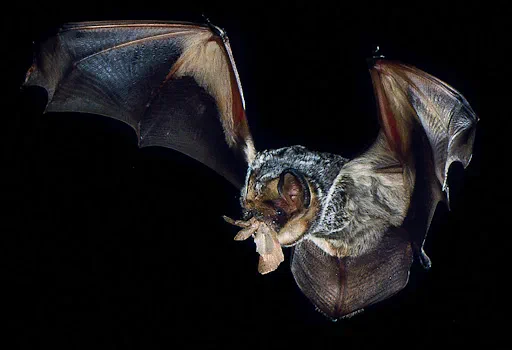
A bat catching an insect mid-flight | Bats 911
“We haven’t estimated the value of bats in Canada, but they could easily be providing billions of dollars worth of ecosystem services that people benefit from. And they’re also a substantial portion of the biodiversity we have in Alberta,” explained Olson.
Money aside, bats are also amazing pollinators and give bees a run for their honey.
Over 500 plant species rely on bats to pollinate their flowers. Without bats, we can kiss mango, banana, cocoa, agave, guava, and durian goodbye. Is that a world you want to live in?
Some bat species in Alberta have been known to live up to almost 40 years. According to Olson, bats are among the slowest reproducing animals, with females usually having only one pup per year.
These factors make it incredibly difficult for bats to rebound from a fatal disease like white-nose syndrome. Bats do plenty for us, but what can we do for bats?
For starters, don’t kill bats. It’s illegal, so why would you? If you have a building with bats residing in it, contact the Alberta Community Bat Program, and they will put you in touch with professionals who can help relocate the bats.
During the day, bats like to rest in trees, rock crevices, caves, and buildings.
To avoid disturbing bats, people should avoid these areas, including non-commercial caves or abandoned mines, where possible.
If you must enter a cave, clean your shoes and gear before entering caves. Humans can spread white-nose syndrome by accidentally carrying the disease-causing fungus from cave to cave.
In case you were wondering, white-nose syndrome is not transmissible to humans. That doesn’t mean we should care about bats any less.
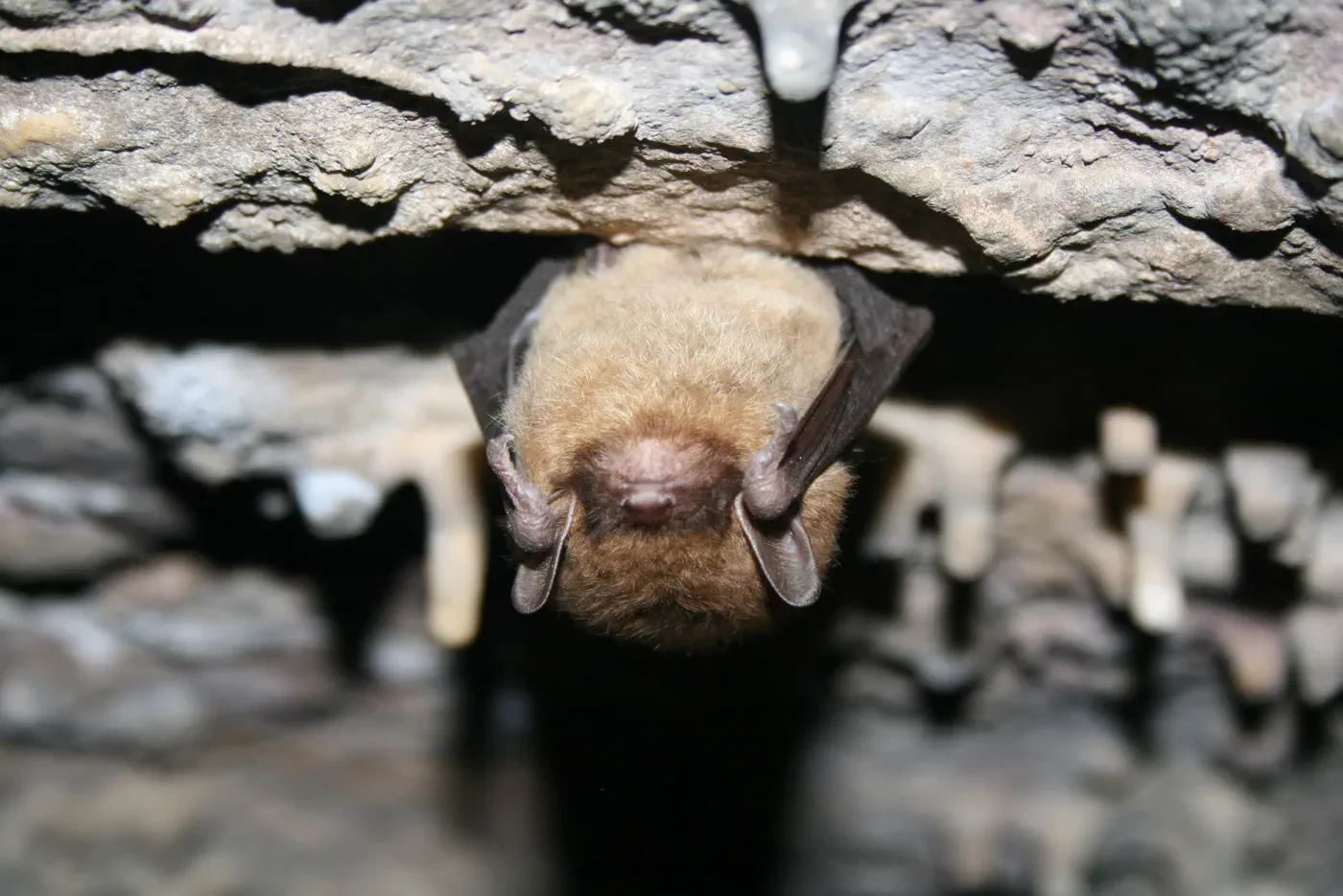
A little brown bat pup | Ann Froschauer | USFWS