
UCP Testing Albertans’ Civil Liberties With Trigger-Happy Use of Constitutional Loophole
The UCP is pushing the constitutional envelope with its use of the Notwithstanding Clause
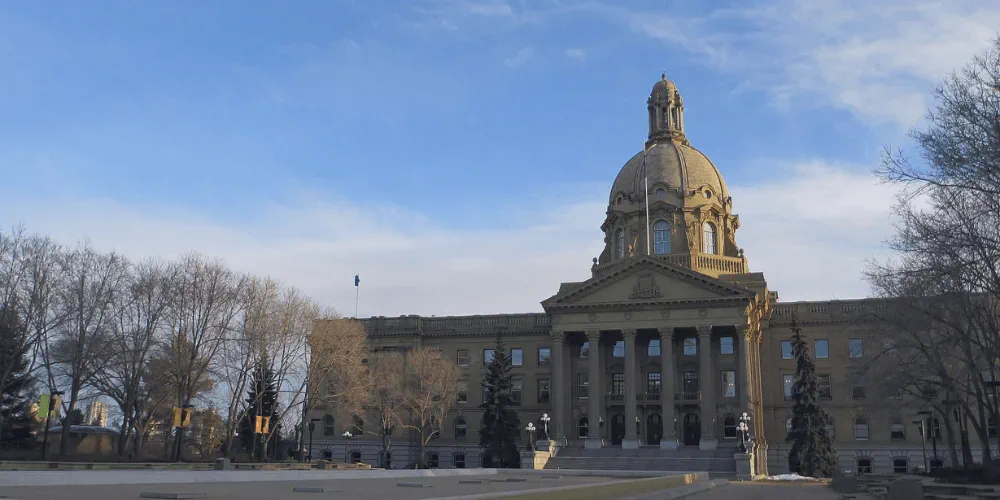
For the second time in as many weeks, Danielle Smith’s UCP government has invoked a constitutional provision called the Notwithstanding Clause to pass laws and shield them from legal review.
In late October, the provincial government used it to send 51,000 striking teachers back to work and force them to accept a contract. Last week Premier Smith used it again, this time regarding the rights of transgender youth and adults.
Albertans who care about freedom and liberty – and most do – should be deeply concerned about these actions.
Origins of the clause
The Notwithstanding Clause, Section 33 of The Canadian Charter of Rights and Freedoms, enables lawmakers to circumvent charter rights and freedoms and prevent court challenges.
It’s not trivial. The charter recognizes, for example, the right to freely practice one’s religion, to speak freely, to engage in peaceful protest, and to collectively bargain for better working conditions..
That’s why the Canadian Civil LIberties Association is watching the actions of Alberta very closely.
When the charter was being negotiated in 1981, Ontario, New Brunswick and the federal government wanted the charter of rights entrenched. The other provinces and territories wanted elected officials to have the last say.
The Notwithstanding Clause was added in as a last minute compromise to get the charter passed.
Clause used 12 times since 2019
It was 40 years before a government first invoked the Notwithstanding Clause. But times have changed. Since 2019, conservative governments in Quebec, Ontario, Saskatchewan and now Alberta have used this anti-democratic loophole a total of 12 times.
“The Charter override was intended to be a last resort, not a pre-emptive strike against Charter rights. Alarmingly, recent history shows that some provincial governments have not hesitated to stray from this initial objective,” writes the Canadian Civil Liberties Association in an analysis of the Notwithstanding Clause. “We should all be wary of normalizing the use of this dangerous clause to override important rights and freedoms.”
Federal Justice Minister Sean Fraser also questioned the UCP’s judgment.
“When you are reaching for the notwithstanding clause, what you’re essentially doing is saying we’re going to adopt a law without regard as to whether that law is reasonable in a free and democratic society,” he said in a CBC News report.
History of transgender issues in Alberta
In a recent blog post lawyer Jennifer Koshan, a University of Calgary law professor, laid out the history of transgender issues and politics in Alberta. It’s complicated.
Three bills came into effect last December targeting trans and gender diverse youth. Bill 26 restricts gender-affirming health care for youth under 18. A court injunction prevented this bill from coming into effect and is facing another court challenge from the Canadian Medical Association and three Alberta doctors.
Bill 27 restricts students’ use of gender-affirming names and pronouns and is also facing a constitutional challenge. Bill 29 limits participation of people over 12 in female-only sports to those who were registered as female at birth. This law has yet to face a legal challenge.
The UCP’s recent use of the Notwithstanding Clause is an effort to ram through these three laws without the benefit of legal oversight, according to Koshan’s analysis. She has cautionary words for Alberta’s government.
She said invoking section 33 is premature and that it ”undermines the constitutional duty of courts to oversee the actions of governments in relation to possible breaches of Charter rights and freedoms.”
Judicial oversight needed
In recent news reports, Premier Smith said elected officials should not be constrained by unelected judges.
Don’t be fooled.
One of the purposes of judicial oversight is to restrain governments from abuse of power and passing unjust laws. Overriding the charter of rights and freedoms to push an ideological agenda is one of those abuses.
If evidence is supposed to be the foundation of good laws, then allow the courts to put controversial laws under the legal microscope. Good and just legislation will survive. Bad laws shouldn’t.
That’s the only way that the rights and freedoms of all Albertans will be protected no matter what government – right, left or centre – is in power.