The Silver Lining To A Crazy Wildfire Season
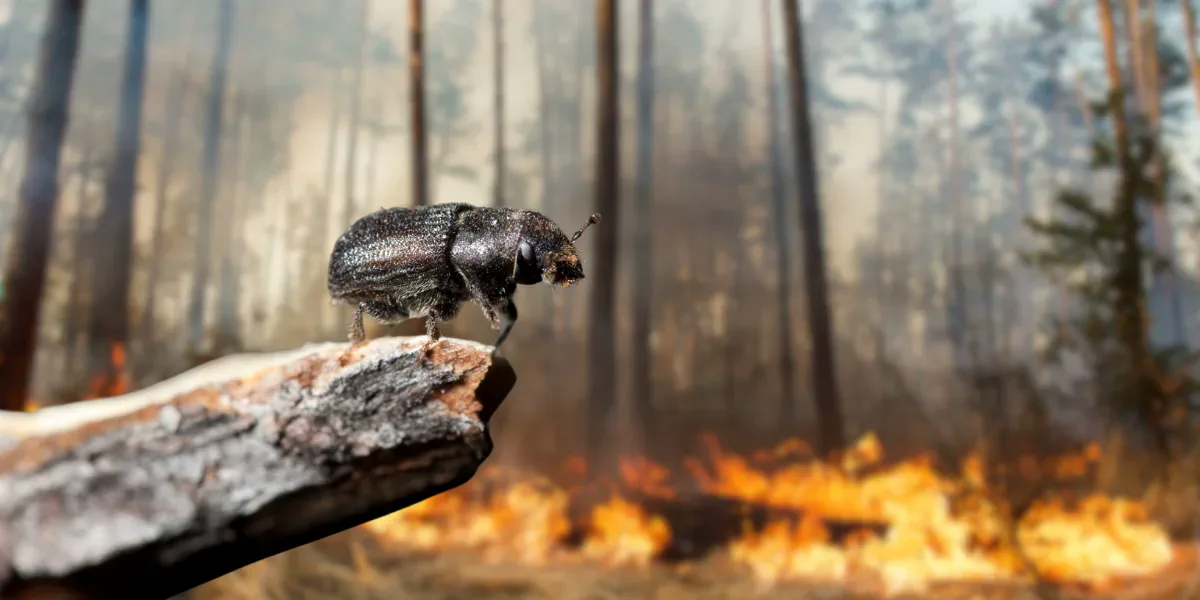
If a tree is fully burned, mountain pine beetles have nothing left to munch on. But if it’s only partially burned, watch out!
It’s been a terrible fire season. There are currently 116 wildfires burning in the province, and 19 are out of control.
This brings our current wildfires this year to 860. In early May, these wildfires forced nearly 30,000 residents from their homes.
But it’s not all bad news. According to Nadir Ergbilgin, a professor of forest health and the Department Chair of renewable resources at the University of Alberta, wildfires can help limit the growth of the spiking mountain pine beetle population.
Mountain pine beetles are Alberta’s most destructive pine insect, attacking more than 2 million hectares of forest. These pests destroy trees by consuming their living tissue.
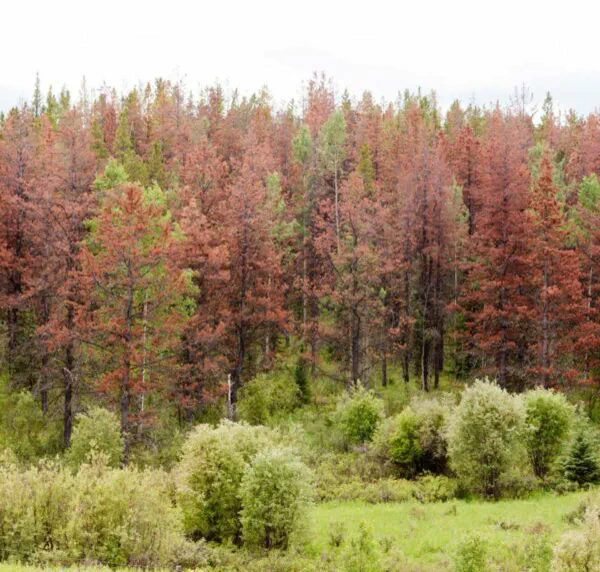
A forest that has been ravaged by mountain pine beetles | Alberta Forest Products
Warmer temperatures linked to climate change have allowed mountain pine beetles to expand their range and survive in previously too-cold areas.
But Ergbilgin points out that wildfires can also eliminate mountain pine beetles if an infested tree is fully burned.
“When you burn the trees, you’re burning the insects under the bark; when the fire kills the tree, it is of no use to the beetles because they rely on the fresh source under the bark, and it becomes charcoal, so they cannot use it,” he told the Edmonton Journal.
However, if a tree is not fully burned, it becomes vulnerable to mountain pine beetle attacks. This is because partially burned trees still have fresh bark that the pests can burrow under.
“Some trees are partially burned, and some sustain foliage and root damage, they’re stressed, they’re alive, and they may be targeted by mountain pine beetles,” said Ergbilgin.
While wildfires may contribute to reducing Alberta’s mountain pine beetle population, Ergbilgin believes the impact of management activities, like burning and cutting infested trees, takes the cake.
However, he warns that a mountain pine beetle resurgence is very likely unless these activities are maintained.
Thankfully, the mountain pine beetle population has dropped by 94 percent from its most recent peak in 2019. Recent periods of extreme cold have limited the population growth of these pests.
Prolonged cold winter snaps killed mountain pine beetles if they happened for long enough at the right time. But despite a few years of fire and ice, those long cold snaps are getting rarer because of global warming.
There are 5.5 million hectares of pine in the province valued at more than $11 billion that are susceptible to mountain pine beetles. But our forests are worth protecting, even without a price tag.