The Boss: Helping Banff’s Iconic Bear Live Even Longer
Grizzly 122, The Boss is now a senior and needs our help to live a full life
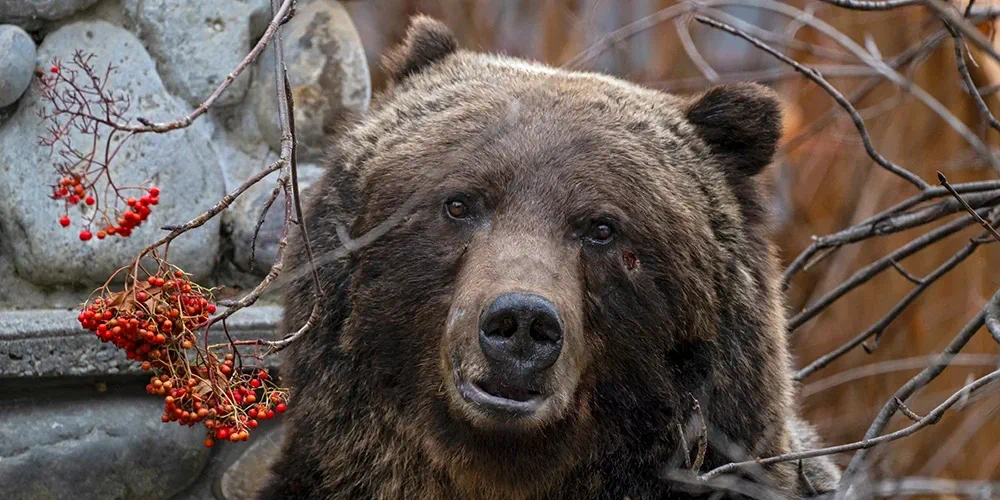
Probably the most famous grizzly bear in the Canadian Rockies is Bear 122, “The Boss.”
For those not in the know, The Boss is estimated to bebetween 24 and 28 years old and enormous, weighing between 650 and 700 pounds (295 and 317 kg), depending on the time of year. He has a massive home range of over 2,500 square kilometres, spanning Banff, Yoho, and Kootenay national parks.
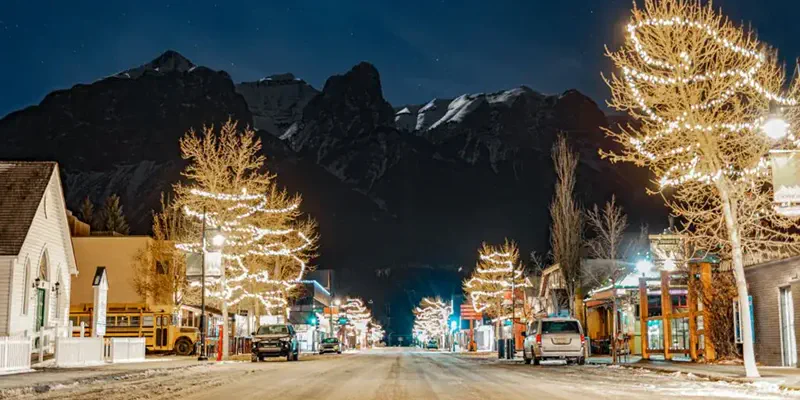
The Boss has been the dominant male grizzly in the Bow Valley for over a decade, siring most ofthe local population’s cubs. But his days as top bear seem to be numbered, as evidenced by a recent trip he made out of his usual home range in the mountain parks into Canmore and Harvie Heights, where he appeared to be looking for easy snacks from fruit trees in town.
Photos and videos posted online show that The Boss managed to get into fruit trees in Harvie Heights, which doesn’t bode well for his future.
Brian Spreadbury, a former human-wildlife conflict supervisor with Parks Canada, said in an interview that “Bears are all about ‘risk versus reward’ … As the big bear ages, he may well start exhibiting riskier behaviours, like leaving Banff park and wandering through Harvie Heights and Canmore [looking for food].”
After he visited Canmore, The Boss headed to Banff, where he kept trying to get to the south side of the tracks and into the Marmot Crescent area, where he successfully got into crabapples last fall. Parks staff hazed the big bear and kept him moving west back into the park. Fortunately, the crabapple trees were removed last fall after the big bear feasted on fruit trees and bluff-charged residents, prompting Banff residents to chop down fruit trees in record numbers to help protect the beloved bear.
Way to go Banff!
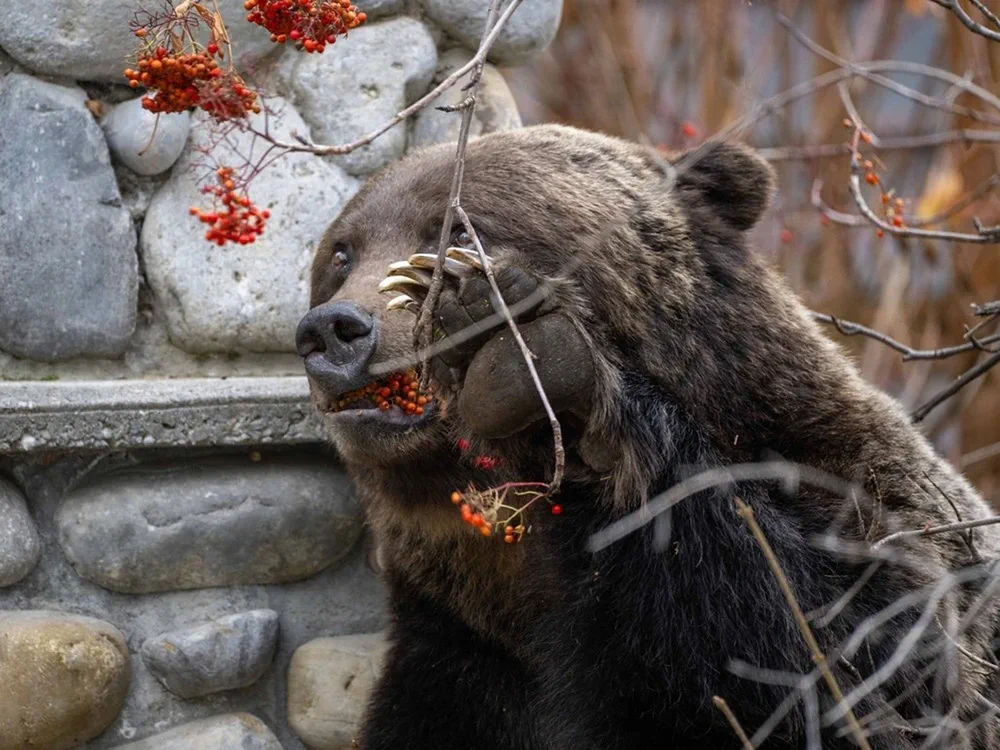
The Boss feeding on mountain ash berries in a backyard in Harvie Heights on November 4, 2024 | Jason Leo Bantle | Into the Wild
The Boss And His Reputation
The Boss has an epic reputation. First off, his pursuit of food sometimes gets him into trouble. He was once hit by a train but survived while foraging for spilled grain along the railroad tracks. After getting into steak bones and corn cobs, he forced the construction of an electric fence around a former dumpsite near Castle Mountain.
The Boss has gained notoriety not only for his massive appetite but also for his interactions with other bears. In 2013, he killed and ate a black bear along the Sundance Canyon trail, and there’s evidence suggesting he may have eaten another black bear in 2012.
And then there are the battles with younger, up-and-coming grizzlies. According to Spreadbury, he doesn’t remember The Boss showing signs of significant battle wounds before spring 2018. The big bear was so intimidating that few other bears likely challenged him.
“From 2018 onward, the human-wildlife conflict crew would see facial wounds pretty much every year from what were obviously dominance-related fights,” Spreadbury told theRocky Mountain Outlook.
In June 2020, Spreadbury noted that The Boss had significant injuries to his face and hip that incapacitated the bear.
“He actually laid down in a meadow and basically didn’t move for a day and a half, an unheard-of circumstance for a big dominant bear during the mating season. Some of us thought he might actually succumb to sepsis from his injuries, but a day-and-a-half later, he was up and moving like nothing happened,” he said.
By August, he was in prime form, battling with his closest rival, Bear 136 (nicknamed “Split Lip”), in what wildlife photographer John E. Marriott dubbed the “battle of the titans.” Read about John’s amazing encounter at this link.
“He is [now] in his mid-20s and maybe even higher, and he’s kind of getting to the end of his term, but he’s a grizzly bear that still garners a lot of attention, and we do ask people to respect him and give him the space he deserves,” said Blair Fyten, human-wildlife coexistence specialist for Banff National Park.
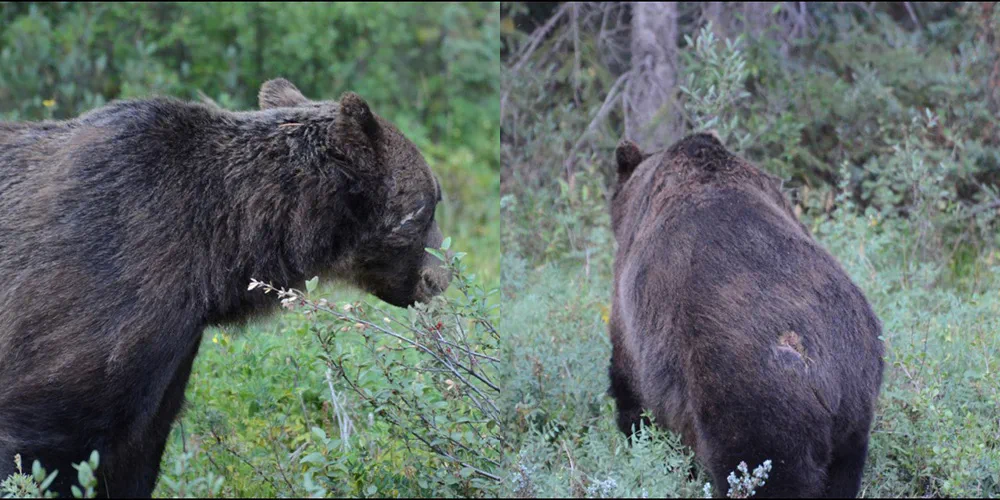
Fresh battle scars on The Boss from the summer of 2024 | Adam Sherriff | Parks Canada
Doing Our Best for The Boss
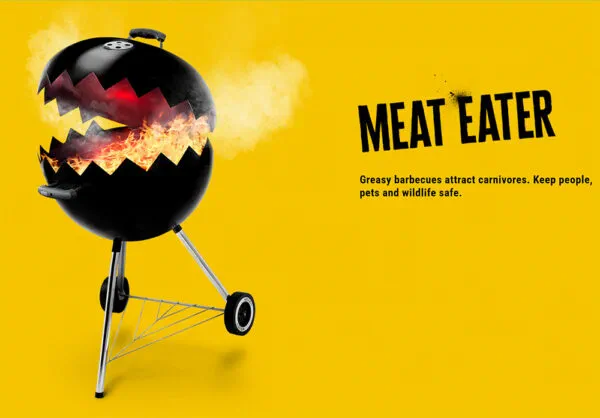
A poster from the Keep Wildlife Alive Ambassador Program in Banff and Canmore | keepwildlifealive.ca
Now that The Boss is getting up in age, and other bears, like Split Lip, are set to take on the boss bear of the Bow Valley, we need to do all we can to protectThe Boss from death at the hands of humans.
It is rare for a bear in the busy Bow Valley to reach such a ripe old age. Most bears are either killed by humans directly or in collisions with vehicles or trains, as happened withNakoda, the white bear of the Bow Valley, and her two cubs.
The best thing we can do for The Boss is eliminate wildlife attractants like fruit trees, garbage, bird seed, dirty BBQs, and pet food left outdoors.
Banff and Canmore have robust fruit tree removal incentives andstrong educational programs to help people bear-proof their yards. If you’re a resident of either of these towns, please do your part to keep bears safe.
It would be fantastic if The Boss could live to the ripe old age of 30, which, according to Fyten, “is probably quite rare.”
Fyten also urges people to respect this magnificent bear and call Banff National Park dispatch at 403-762-1470 when the big boy is spotted so wildlife officials can monitor the senior bear.
“We just want him to enjoy the final years of his life here and do what bears do,” he said.
“We all hope that he just has a natural death in the end.”
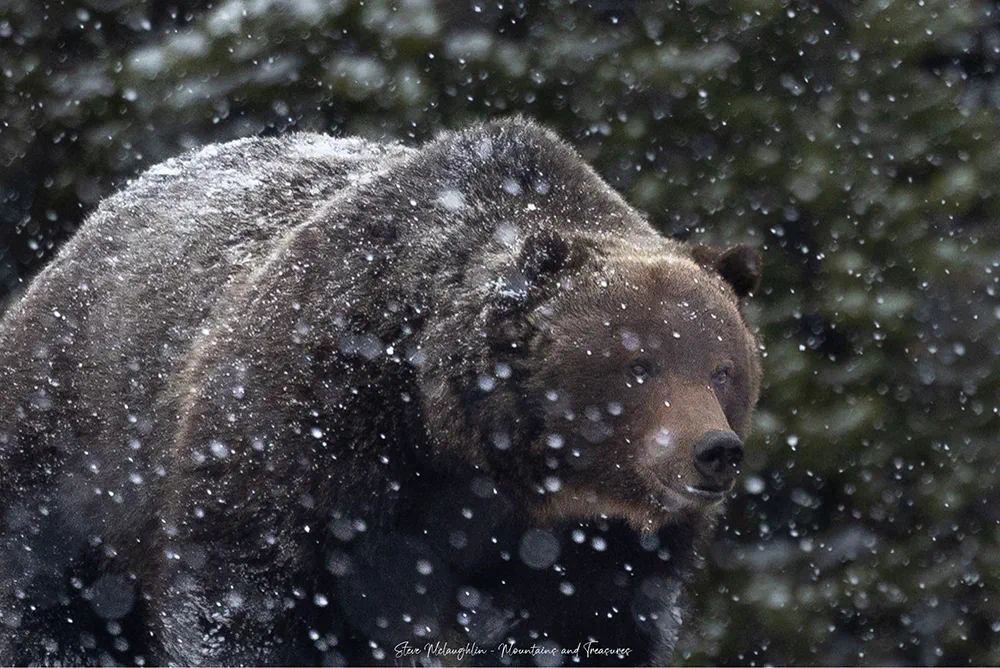
The Boss | Steve Mclaughlin | Mountains and Treasures