Road to Ruin: The Legacy of Abandoned Coal Exploration
Kevin Van Tighem warns of the ‘increasingly urgent’ and ‘hopeless’ state of deteriorating coal exploration roads
We’ve been here before.
A new UCP government is trying to fast track a foreign-owned coal mine in the Eastern Slopes of the Rockies.
Two years ago, Jason Kenney tried to open up coal mining in the region. A broad cross-section of Albertans stood up and forced anabout-face.
Now, Premier Smith’s government has done some fancy paper shuffling to allow Australian-owned Northback Holdings Corporation to drill and explore in the Grassy Mountain area near the Crowsnest Pass.
Albertans arebecoming vocal again.
But before we dig a bigger hole (so to speak) and approve new explorations, Kevin Van Tighem, a former superintendent of Banff National Park, is wondering why we are not dealing with the scars from past coal exploration.
Past Scars
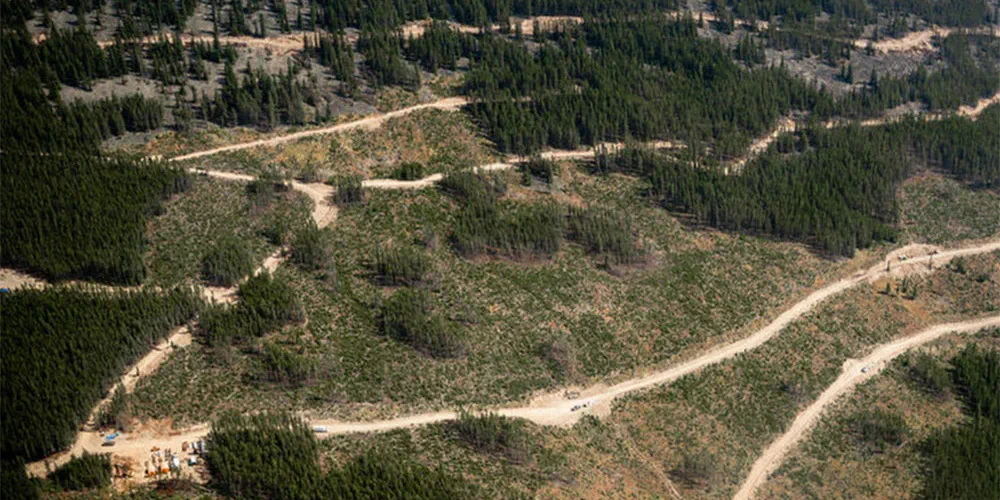
Van Tighem has been observing the deteriorating state of these exploratory coal roads since 2020.
On his expeditions, he has found groundwater seeping and evaporating from the roadsides, weeds flourishing in disturbed soil, and drill sites littered with abandoned equipment.
Van Tighem [describes](http://Kevin Van Tighem | Facebook) the situation as “increasingly urgent” and “increasingly hopeless.”
These roads, cut through the wilderness, are exposed to the elements and erode alarmingly fast.
An Abandoned Legacy?
Between June 2020 and February 2021, Kenney’s UCP permitted several Australian coal companies to operate in parts of Alberta’s Rockies. However, following massive public protests, this policy was quickly reversed.
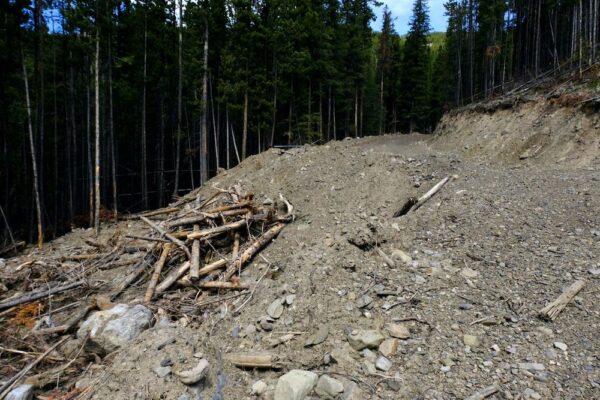
Coal mining exploration road. Kevin Van Tighem | Tyee
Despite the policy reversal, the damage remains.
Katie Morrison, president of the Canadian Parks and Wilderness Society (CPAWS),notes that these roads are not maintained, leading to sediment and stream diversion issues.
Even though no coal mines were ever completed, the roads persist and are degrading the environment.
Many of these exploration mining companies lack the capital to clean up.
Like Alberta’s abandoned gas and oil wells littering and polluting the environment, coal exploration leaves a legacy of destruction.
Ironically, Danielle Smithinstituted a moratorium on approving new renewable energy projects to ensure that energy companies did not leave abandoned and decaying projects behind without cleanup.
Why one set of rules for renewables and a completely different stand for oil, gas, and coal?
A Threat to Watersheds
Van Tighem has observed that groundwater on the disturbed slopes, the essential water supply for the region’s rivers, evaporates before reaching its destination. This causes further loss of plant cover, especially in droughts. The loss of plant cover increases soil erosion, which increases the frequency of floods and the degradation of our watershed.
Van Tighem criticizes the Alberta government’s lack of enforcement of reclamation, stating that if one wanted to ruin a watershed, Alberta has effectively shown how.
Maintaining healthy watersheds is crucial, especially since much of Alberta’s agriculture relies on irrigation.
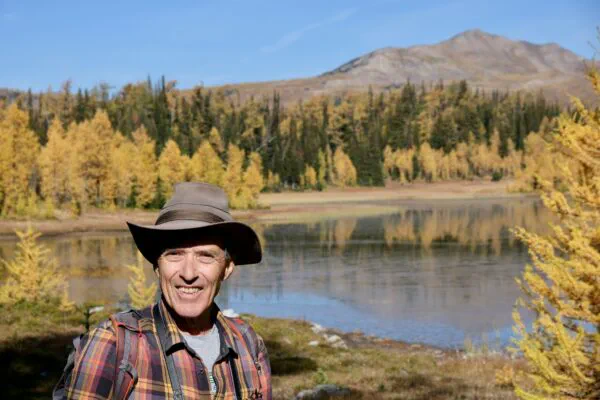
Kevin Van Tighem. Photo by Gail Van Tighem | Facebook
And now, with new exploration permits potentially coming online, more damage is likely.
Exploration permits in Alberta have a five-year timeline, with two years for exploration and three for site reclamation. Compared to British Columbia, Alberta doesn’t demand a deposit from exploration companies before they start mining operations, so companies have little incentive to clean up after themselves.
David Luff, who served in a previous government and was instrumental in the 1976 Coal Policy, criticized the UCP’s coal policy reversal as “morally and ethically wrong.”
He highlighted the lack of consultation with Indigenous communities and the secretive nature of the new policy changes.
Van Tighem says that water is a more valuable resource than coal, which has a limited life span in a world transitioning to renewables.
Poll after poll has shown that most Albertans are against coal mining on the Eastern Slopes.
Why should we approve new mines when we haven’t dealt with the past scars of coal mining?
Kevin, and many other Albertans want to know.