Regular Albertans May Be Dangling On The Hook For Oil Sands Cleanup
It’s a numbers game and Albertans stand to lose big in the oil sands, according to Alberta’s Auditor General Doug Wylie.
It’s a numbers game and Albertans stand to lose big in the oil sands, according to Alberta’s Auditor General Doug Wylie.
In a recently released report, the auditor general’s office found that the province’s Mine Financial Security Program (MFSP) is collecting just a fraction of the funds from big oil that will be needed to clean up massive oil sands mines.
Oil sands reclamation will cost nearly $52 billion
The cost for reclamation is currently pegged at $51.9 billion. However, as of September, the MFSP was holding just $1.8 billion in financial security from oil sands companies.
The report highlights a long-standing flaw in the formula used for calculating financial security that overstates mine asset value and under-collects on financial security.
It means regular Albertans could be on the hook for billions of dollars in oil sands reclamation costs unless the formula is fixed.
“If MFSP assets are overstated, operators might not pay the necessary security, leaving Albertans at risk of bearing the financial costs of oil sands mine reclamation or the mines being unreclaimed,” said Wylie in a media release.
Wylie added that Alberta Environment and Protected Areas (AEPA,) the department that manages the MFSP, claims that “the method and calculated values are reasonable and that the MFSP is functioning as intended…”
“We found no evidence to support these claims,” Wylie said.
A decade ago, the auditor general first flagged problems with the financial security program and how it is putting Albertans at risk.
Formula is broken, reclamation price tag is climbing
The province has refused to make adequate changes to ensure the polluter pays principle applies fully to oil sands players.
In the meantime, clean up liabilities are growing, corporations continue to mine profits from the oil sands, and the general public is more at risk than ever of paying for the mess left behind when the mines close.
In 2023 Martin Olszynski, an energy, resource and sustainability expert at the University of Calgary, co-authored a report again demandIng that the government overhaul the mine security program.
“Unfortunately, Alberta has refused to develop an effective regime to protect Albertans from bearing the costs of oil sands mine remediation and reclamation,” the report said. “Continued mismanagement has left Albertans with a significant risk that they will be responsible for cleaning up oil sands mines that threaten potentially irreversible environmental harm, including a growing inventory of nearly 1.6 trillion litres of toxic tailings.”
Alberta’s oil sands stretch across 140,000 square kilometres of northern Alberta. The area is the traditional territory of the Athabasca Chipewyan First Nation, which suffers some of the highest cancer rates in the province.
Albertans facing massive financial liability
An estimated 165 billion barrels of bitumen are in the ground. Extracting it is a hugely energy-intensive process. The industry uses 2 billion cubic feet of gas per day (equal to 350,000 barrels of oil) just to separate bitumen from sand.
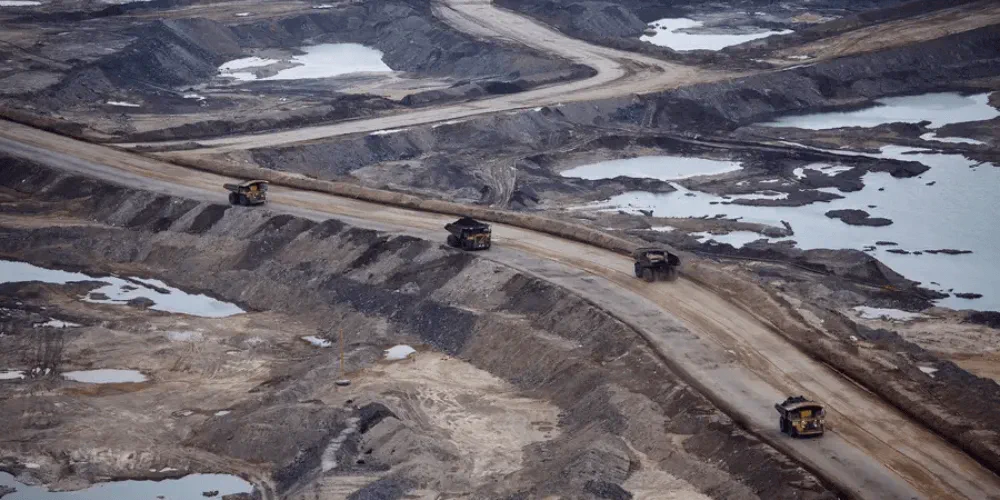
Surface mining of the oil sands has so far destroyed 750 square kilometres of boreal forest, an area roughly the size of Edmonton.“A full decade ago, Alberta’s Auditor General raised the alarm that the province’s program for managing oil sands mines’ closure liabilities was overestimating asset values, exposing Albertan taxpayers to significant risk,” wrote U of C’s Olszynski on Linkedin. “10 yrs later, AEPA [Alberta Environment and Protected Areas] refuses to do the analysis, so the AG did his own, and it suggests that asset values are being overestimated by 2X or even 3X. The effect is that oil sands operators are not posting the financial security that they should be to reduce the risk that Albertans will get stuck with a multi-billion dollar tab.”