
Passive Solar Greenhouses: A Growing Solution for Alberta Backyards
Grocery prices are soaring, and a passive solar greenhouse is the perfect way to take control of your food supply.
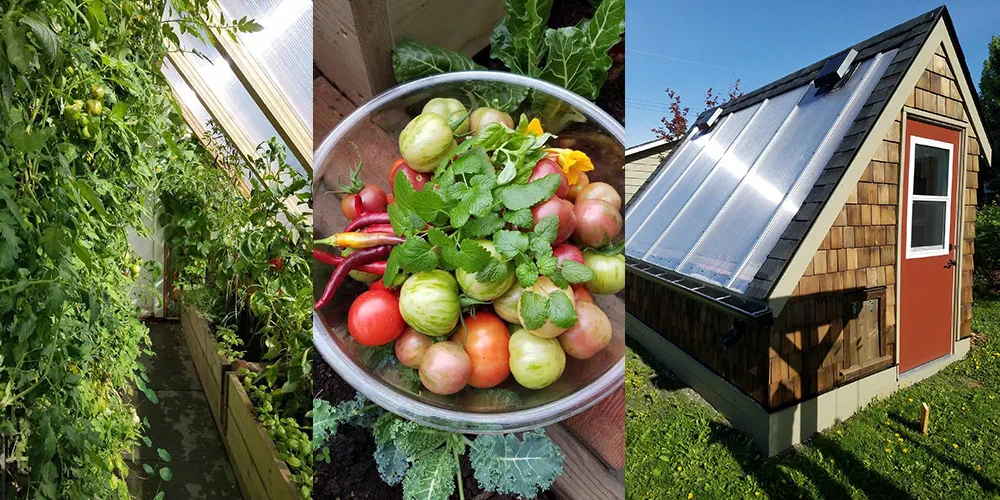
Ever since COVID disrupted supply chains, there’s been a surge in interest in home gardening. Now, with grocery prices soaring and ongoing tariff threats, more and more Albertans are transforming their yards into vegetable gardens. It’s becoming common to see backyard plots—and even front lawns—filled with potatoes, carrots, and beets instead of just grass.
Root vegetables thrive in Alberta’s climate, but if you want to grow things like tomatoes, peppers, or melons, you’ll need a little help. These crops require a longer growing season, which is where greenhouses come in. You’ve probably heard the term “hothouse tomatoes”—that just refers to tomatoes grown in commercial greenhouses. Most Canadian-grown grocery store tomatoes, peppers, and cucumbers come from commercial greenhouses.
If you’re aiming for a full backyard harvest, a simple garden plot won’t cut it—you’ll need a greenhouse, too. And for Albertans, passive solar greenhouses are the best option. They provide a cost-effective, sustainable way to extend the growing season, keeping your garden productive while minimizing energy costs and environmental impact.
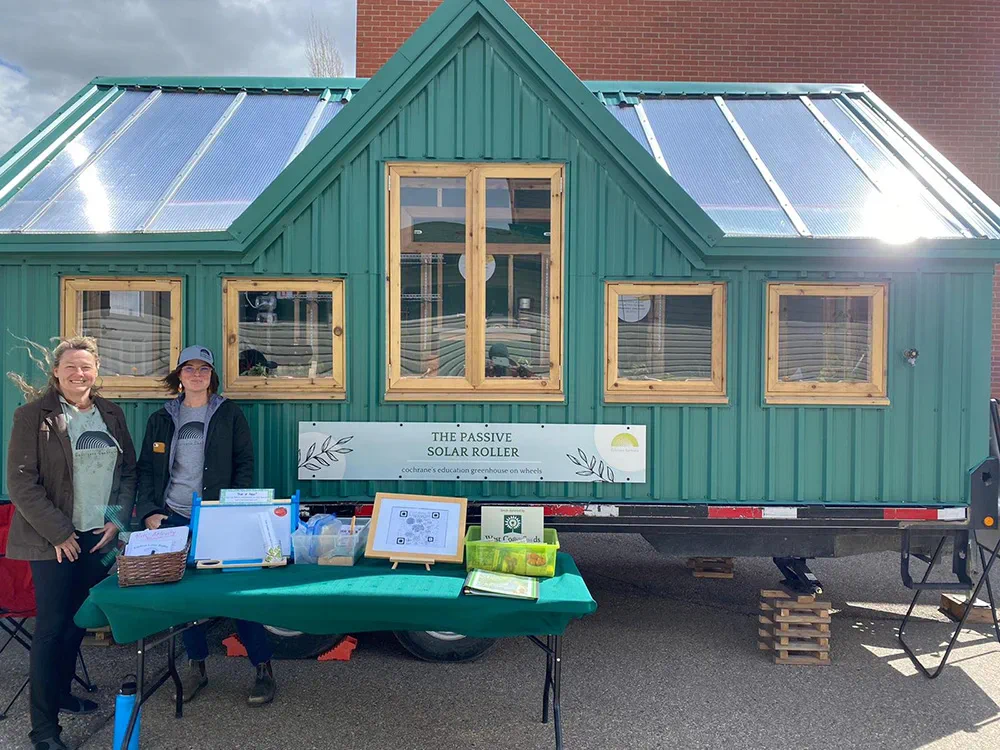
Cultivate Cochrane’s “Passive Solar Roller,” a passive solar greenhouse on a trailer used for education and demonstration purposes | cultivatecochrane.ca
What is a Passive Solar Greenhouse?
What is the biggest mistake people make when diving into greenhouse gardening? Picking up one of those budget-friendly metal and clear plastic greenhouse kits from the hardware store. Sure, they seem like a great deal at first, but according to Rob Avis, passive solar greenhouse expert and founder of Verge Permaculture, they’re more trouble than they’re worth.
“These kits overheat like crazy in the summer and guzzle energy to stay warm during the cooler months,” Avis explains. “Most people end up using them as storage sheds after one frustrating season of failed growing,” Avis explained in a talk given to Cultivate Cochrane in 2019.
So, what sets a passive solar greenhouse apart from the typical greenhouse?
A passive solar greenhouse harnesses and stores solar energy to maintain optimal growing conditions without relying on external power sources. Unlike conventional greenhouses, it uses natural processes to regulate temperature, collecting solar radiation during the day and releasing stored heat at night.
As Alberta horticulturist Daniel Chappellexplains, “Passive solar greenhouses are designed to take care of the passive gains that sunlight, or solar radiation, gives to us throughout the day. The goal of a passive solar greenhouse is to collect as much solar radiation from the sun in the form of heat, so that you can take advantage of it later to prevent the greenhouse from freezing.”
This design minimizes heating costs and extends the growing season, making it well-suited for Alberta’s harsh climate.
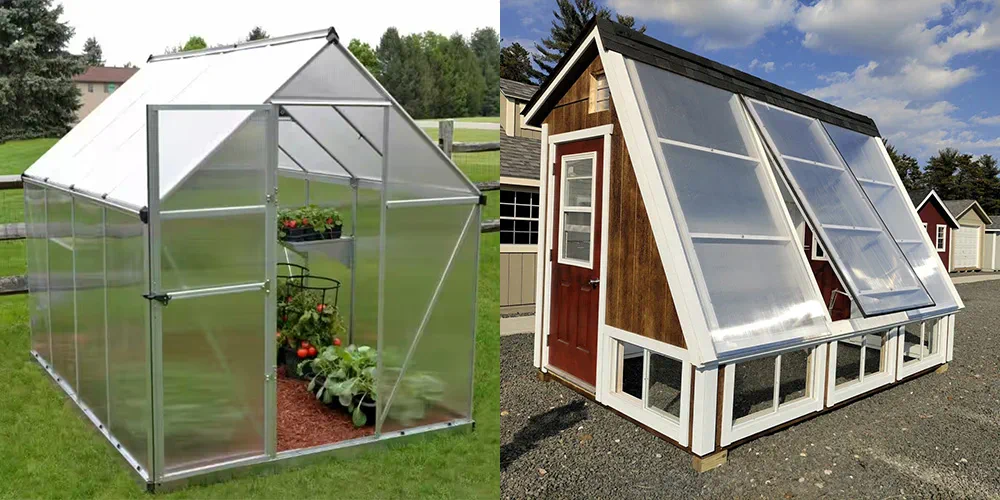
The metal and plastic greenhouse (left) will require energy inputs to cool it in the summer and heat it in the shoulder season, whereas the passive solar greenhouse (right) is energy self-regulating | hometownstructures.com
Key Design Principles for Passive Solar Greenhouses
A well-designed passive solar greenhouse starts with the right orientation. While direct southern exposure seems ideal, experts suggest angling the greenhouse slightly eastward to capture the morning sun and reduce afternoon overheating.
The structure should be highly insulated, except for the south-facing wall, which should be glazed to maximize sunlight absorption. The glazed wall isbest angled at about 70 degrees in Alberta for optimal heat gain. The remaining walls—north, east, and west—need heavy insulation to minimize heat loss, with insulation extending below ground to prevent thermal escape through the soil. Expert Rob Avis suggests using R20 insulation for greenhouse walls—better than most homes in the area!
Greenhouses need to let in enough sunlight to grow plants and keep in warmth. Clear polycarbonate panels are a great middle ground, allowing about 72% of light through and providing decent insulation.
To keep temperatures steady, materials like concrete, stone, or even barrels of water can absorb heat during the day and release it at night. Some greenhouses use underground pipes to move warm air beneath the floor, preventing the soil from freezing.
Good airflow is also essential. Greenhouses can get too hot or stuffy, so a well-designed ventilation system—such as high and low vents—can help circulate fresh air without relying on fans.
You can see by the specifications above just how different a passive solar greenhouse is from a metal and plastic hardware greenhouse.
So How Much Will this Cost?
The cost of a passive solar greenhouse depends on size, materials, and design complexity—whether you go with a DIY build, a kit, or a custom design.
For hands-on builders, simple DIY models start around $5,000, while larger, high-end versions can reach $25,000 or more.
Though the upfront cost may be higher, a well-designed passive solar greenhouse slashes heating and cooling expenses, making it far more cost-effective in the long run.
When budgeting, remember that premium materials—especially for glazing and insulation—come at a higher price but pay off with better durability and energy efficiency. For instance, UV-protected polycarbonate panels cost more than polyethylene film but offer far superior performance and longevity.
Happy Growing
A passive solar greenhouse is a game-changer for Alberta gardeners, making it easier to grow fresh food year-round while cutting energy costs and reducing environmental impact.
Whether you’re passionate about local food, sustainable living, or simply want to extend your growing season, this smart design helps you beat Alberta’s tough climate and sidestep rising food and energy prices.
Want to build your own? Check outVerge Permaculture’s passive solar design course to get started!
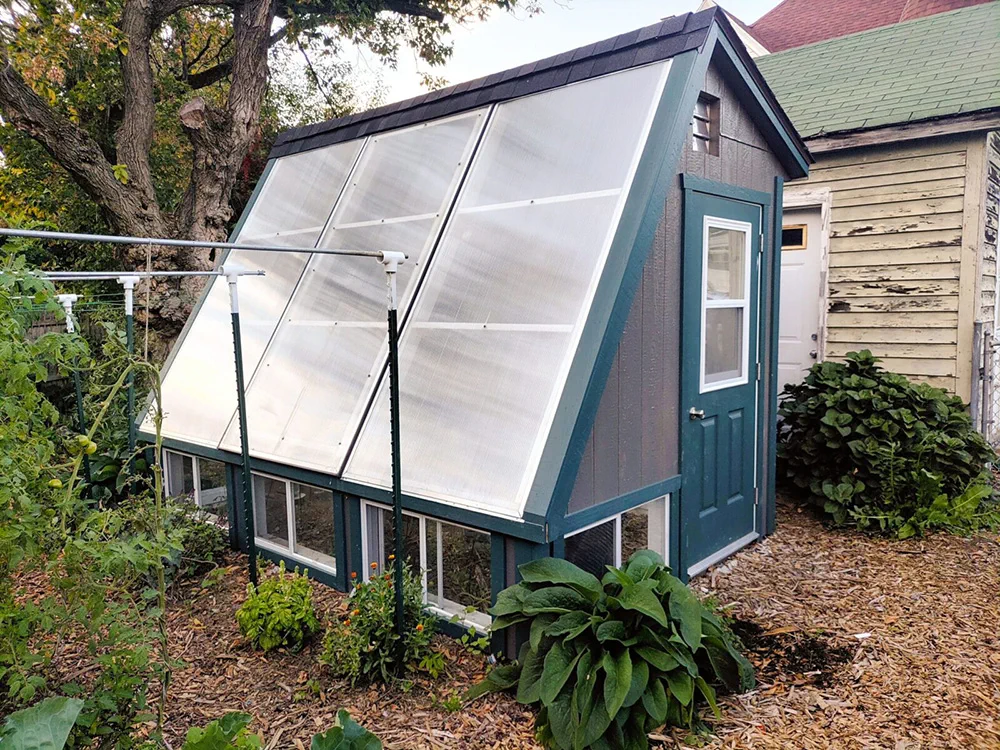
A passive solar greenhouse integrated into a backyard garden | hometownstructures.com