
Drains Don’t Lie: Wastewater Reveals Disturbing Opioid Surge
Drug poisoning deaths in Alberta surpass daily deaths due to heart attacks, car accidents, and homicides combined
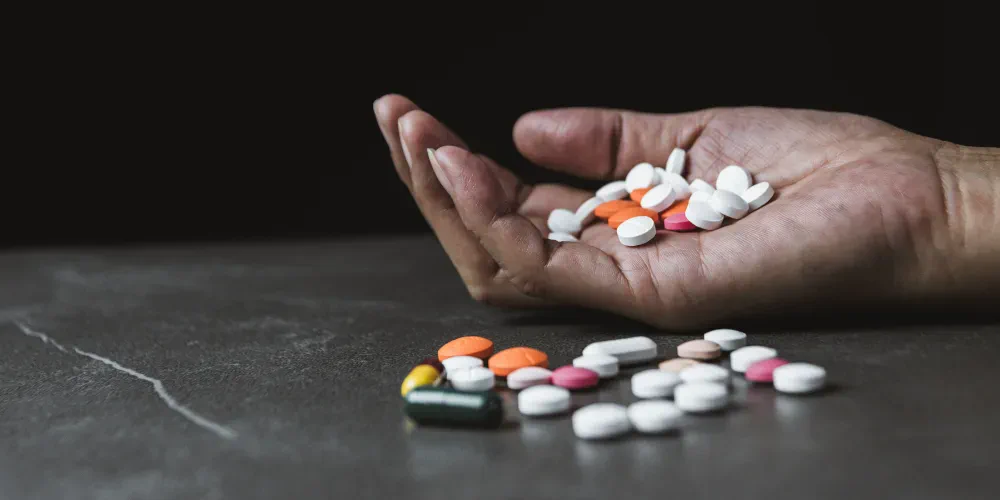
Researchers recently discovered a spike in the quantity of opioids, including other illicit drugs, in wastewater at six different sample sites across Alberta in June.
Let’s talk about why the Cumming School of Medicine and the Calgary Health Foundation were looking at our sewage in the first place.
Typically, wastewater analysis is used to develop and design sewage treatment plants to meet specific discharge standards. However, it can also be used for other applications.
For example, during the COVID-19 pandemic, public health experts analyzed sewage to track and monitor the virus by testing community wastewater.
Using this method, experts could track the spread of COVID-19 in close to real time. The pilot study used wastewater analysis to achieve something similar.
One of the opioids study’s principal investigators was Dr. Michael Parkins, who was part of the COVID-19 wastewater study. According to Parkins, a similar process was used to look for 48 substances related to illicit drugs.
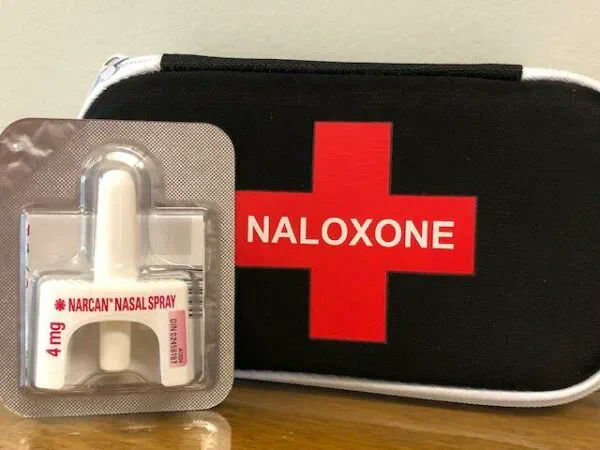
A naloxone kit, which can be used to reverse an overdose of opioids like fentanyl | Kristylee Varley | AM800 News | iHeartRadio
“We are also monitoring for toxic agents that are added to illicit substances during their processing. Several of these diluents…can result in a range of rare adverse events that are difficult to diagnose,” Parkins told the Cochrane Eagle.
The pilot study was funded by the Mathison Centre for Mental Health Research and Education at the Cumming School of Medicine and the Calgary Health Foundation. It will end this fall.
The study collected data at six sites throughout the province. It found four times more carfentanil in the wastewater in June than earlier this year.
Carfentanil is an opioid that is 100 times more toxic than fentanyl and 10,000 times more toxic than morphine. It is not meant for human use and is typically used by veterinarians to sedate elephants and other large animals.
The largest male elephant can weigh up to 15,000 pounds. An average male human weighs about 180 pounds. Imagine what carfentanil can do to a human.
But the question is: How did it end up in our wastewater?
“Our hypothesis, and we can’t confirm this, of course, is that it was…a new cocktail of carfentanil, benzos and xylazine that might have come into the drug supply. We hadn’t seen this sort of super concoction before,” said Dr. Monty Ghosh, one of the study’s principal investigators.
In the first four months of this year, 613 Albertans died of toxic drug poisoning. Over nine in ten of these deaths were related to fentanyl.
A new, even more dangerous opioid is the last thing we need during a drug poisoning crisis.
“We have more overdose and drug poisoning deaths in our province than we have heart attacks, car accidents and murders per day. It’s the biggest public health crisis facing our country,” said Dr. Ghosh.
Dr. Ghosh wants this information to be shared with emergency responders, healthcare workers, and government officials, claiming it could save lives.
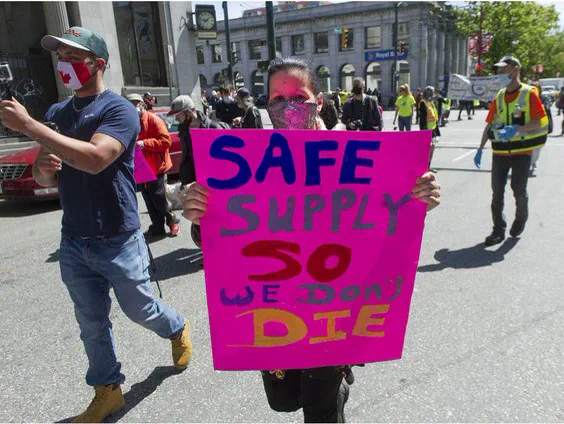
Protestors advocating for a safe supply of street drugs in Vancouver, British Columbia | The Daily Scan
However, the research team is choosing not to disclose the location of the sites monitored in the study. Dr. Ghosh believes this will leave the impression that illegal drug use only occurs in specific areas.
In reality, the drug poisoning crisis is impacting lives across the province. In April, there were 179 drug poisoning deaths. Since then, EMS response data shows things have only gotten worse.
In May, an average of five people a day in Alberta died from drugs, 151 of which were opioid-related. Near the end of June, EMS responded to a record high of 339 reported drug poisonings.
Despite representing six percent of Alberta’s population, First Nations members comprised one in five opioid poisoning deaths.
To address the drug crisis, the government of Alberta has committed to building 11 new recovery facilities.
Some people are on board with the government’s focus on recovery, while others think the UCP should focus on harm reduction. Euan Thomson, a Calgary-based harm reduction advocate, claims treatment services won’t fix the toxic drug crisis.
“We’ve stripped away supervised consumption sites, we’ve eliminated what little safe supply existed before, and there’s very little options left for people who aren’t ready for abstinence,” said Thomson.