
Digging Up A Graveyard For A Highway?
92 people died when The Frank Slide a mining town in Crowsnest Pass
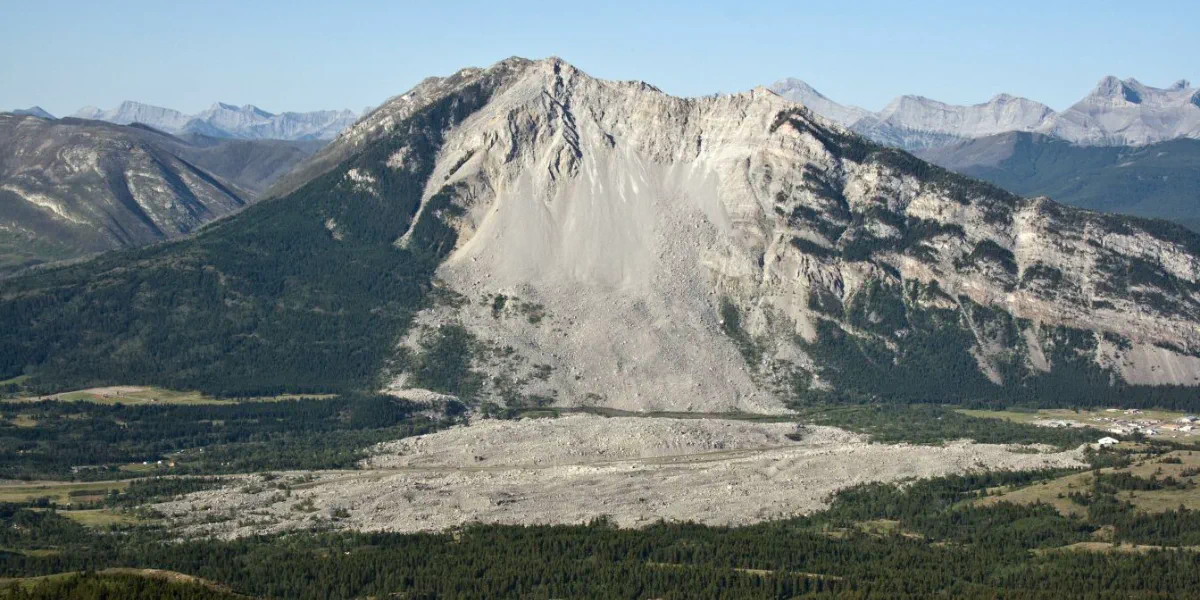
120 years ago, the small mining town of Frank in Crowsnest Pass was ravaged by a rock slide. In just 90 seconds, 3 kilometres of the town were levelled, and at least 92 lives were claimed.
The Frank Slide is an important part of Crowsnest Pass’ identity, but a planned twinning of Highway 3 threatens to ‘desecrate’ the historic site of Canada’s worst rock slide.
The area destroyed by the Frank Slide isn’t just a historic site; it’s a graveyard. The rockslide flattened seven miners’ cottages, six occupied at the time.
A dairy farm, two ranches, a shoe store, a livery stable, and the town’s cemetery were also destroyed. However, the bodies of most of the victims were never recovered.
“When people say if we dig up the highway right here that there won’t be any people under, nobody can say that. Nobody,” Monica Field told The Canadian Press. Field formerly managed the Frank Slide Interpretive Centre with her husband, David McIntyre,
Highway 3 is a busy corridor that connects Alberta with southeastern BC. A twinning of Highway 3 has been on the table for 50 years.
With final approvals granted and a two-year engineering study underway, the project is finally happening.
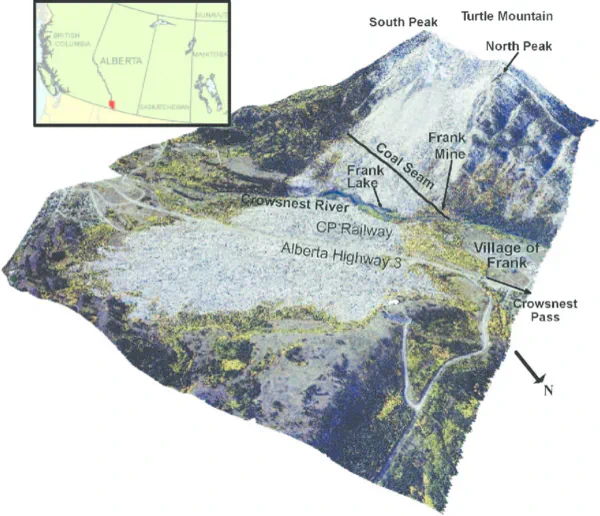
Digital elevation model of the Turtle Mountain area modified to show the Frank Slide | David Milne Cruden | Research Gate
“This highway has been talked about since the late ‘60s, so long-term residents here have heard it and heard it and heard it and don’t believe it, and now we’ve come to the point that its reality,” said Blair Painter, the mayor of Crowsnest Pass.
Painter is a champion of the proposal and is part of the non-profit Highway 3 Twinning Development Association (H3TDA), a group that promotes the twinning of Highway 3.
The mayor believes “…the improved corridor will facilitate positive economic growth in the community and increase safety and mobility for the public.”
But Painter is also aware of the risks associated with the twinning of Highway 3, including the destruction of the Frank Slide historic site.
“There’s a proposed new road to be pushed through the slide, which is definitely concerning…it’s a national historic site and disturbing it doesn’t sit well with most people,” commented Painter.
In 1977, the Alberta government designated the Frank Slide site a Provincial Historic Resource. Historic resources can only be destroyed or altered with approval from the appropriate minister.
“It is the desecration of a historical feature, and I think, ‘What if we decided to put a highway through residential schools?’ We know the Titanic is sacred. Are we going to cut the Titanic in half?” asked David McIntyre.
According to Mike Long, a spokesman for the Transportation and Economic Corridors Ministry, “the current plan minimizes the impact to the site.”
The Provincial Historic Resource designation is supposed to protect historic sites. But many are questioning what meaning this designation has now?