Chef’s Kiss! Calgarian Wins Major Cooking Competition In France
A 20-year-old chef from Calgary shocked the world after winning the 2024 Jean Rougie cooking competition
Cooking is an art.
The most skilled chefs can turn something as simple as grilled cheese into a Michelin star-worthy masterpiece.
Calgary’s Erik Hansen is one such chef.
Hansen is a student in the Southern Alberta Institute of Technology’s (SAIT) Culinary Arts Program.
At just 20 years old, Hansen proved his skills are a cut above the rest at the Jean Rougie competition in France on January 20.
The Olympics of Cooking
The Jean Rougie competition shines the spotlight on our generation’s finest chefs.
For the 14th edition of the competition, eight candidates put their skills to the test to produce two dishes.
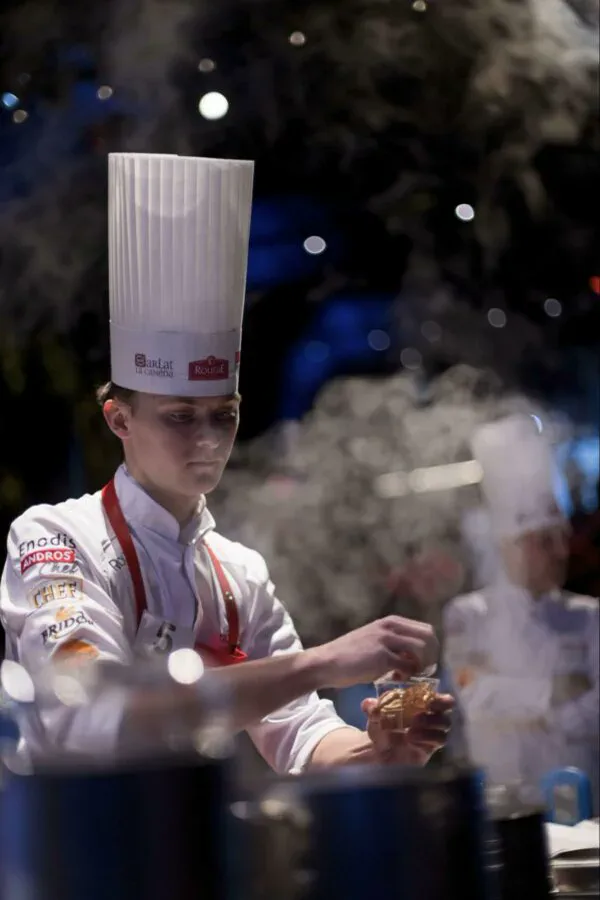
Erik Hansen preparing his dish at the Jean Rougie competition in France | SAIT | X
“Hundreds of people apply – it’s the biggest thing on the planet as far as cooking goes. Hundreds of people cheering. It’s the Olympics of cooking,” said SAIT Culinary Arts Instructor Andrew Springett.
Each dish needed to include two gourmet products of French gastronomy: foie gras and truffles.
Gastronomy is a fancy term, but it just means the art of selecting, preparing, and serving fine food.
Foie gras and truffles stand out as some of the most luxurious foods, not just in France but around the world.
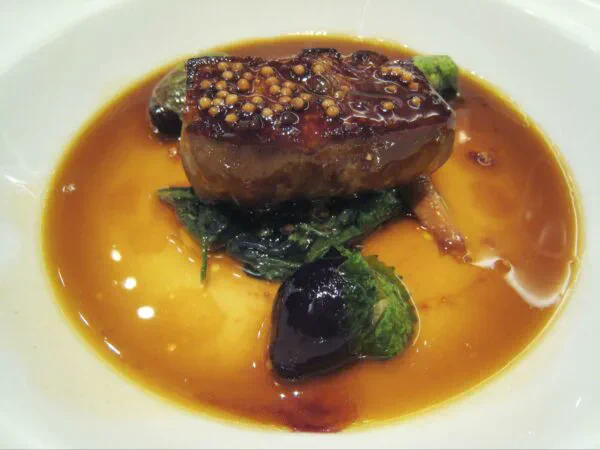
Foie gras is a creamy pasty dish made from duck or goose liver, usually served on toast or crackers. The buttery, rich, and meaty flavours define the expensive dish. Think of a creamier, fancier Spam.
Foie gras isn’t hard to cook, but one mistake could lead to an inedible puddle of melted fat. Only a skilled and knowledgeable chef can bring out the dish’s full potential.
Truffles are a type of fungi that grow underground in forests.
Pound for pound, truffles are one of the most expensive foods you can buy.
Truffles are seasonal and extremely difficult to grow, taking several years to cultivate. But their flavour profile is worth the wait.
Folks love these exceptionally rare fungi for their earthy, savoury, meaty, and deep flavours.
But you can’t throw truffles on anything and expect it to taste good.
A deep understanding of truffles is needed to bring out its flavours in a dish.
Knives Out
Usually, the esteemed Jean Rougie competition is reserved for French chefs. But for the first time, the competition opened its doors to a competitor outside of Europe: Hansen.
Canada was invited to the competition as a guest of honour. Hansen stepped up to the plate to represent Canada and did not disappoint.
Foie Gras | Charles Haynes
He was accompanied by his teacher, Manuel Panfili, SAIT Culinary Arts Instructor. Together, the pair showed off their incredible teamwork to the world.
For the first dish, candidates were asked to prepare a visually appealing and delicious salad. The salad needed to be garnished with a jelly or cold sauce, including foie gras and truffle.
The second dish was a hot dish. Competitors were not told what the dish was until 10 minutes before preparation.
The hot dish was La Noix de Saint-Jacques, a scallop-based dish. Like the first dish, the second one needed foie gras and truffles.
“I was super shaky at the start, and you kind of realize as you go that you can relax. It’s really a mental game, and believing in yourself and being confident is what can lead to your success,” said Hansen.
Hansen didn’t have the home-field advantage, but that didn’t stop him from shocking the judges with his dishes.
“Their jaws dropped, that a kid from Calgary can come and take this competition – unbelievable,” said Springett.
Like sharpening a knife, Hansen spent hours honing his skills in the kitchen leading up to the Jean Rougie competition.
“I can teach skill, but I cannot teach passion. He’s very passionate,” said Panfil.
Hansen’s impressive performance wasn’t born from a desire to win; his love for flavour and his passion for making art out of food led him to victory.

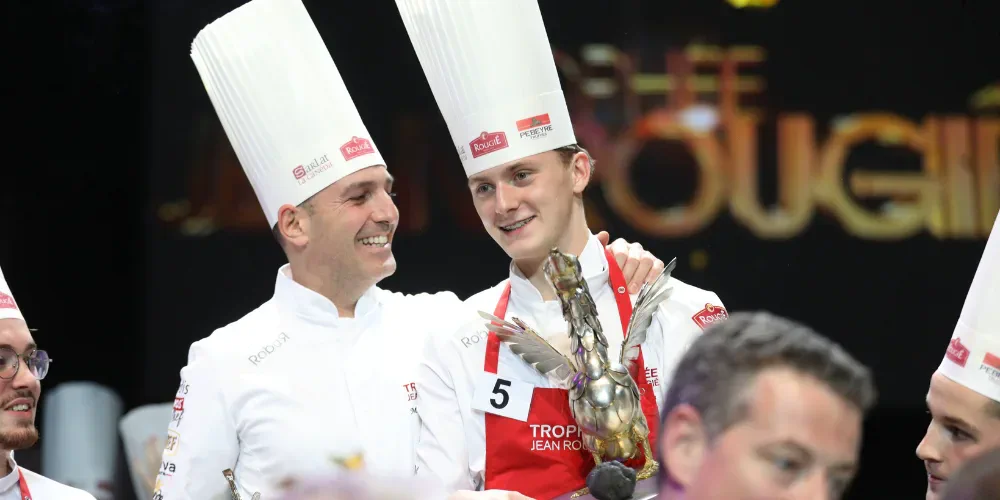
Erik Hansen receiving his award after winning the Jean Rougie cooking competition | SAIT | X