Alberta Farmer Battled Cycle Energy for Months Before AER Closure Order
Still, Frank Cholak is unhappy the company is walking away from a $2 million cleanup bill.
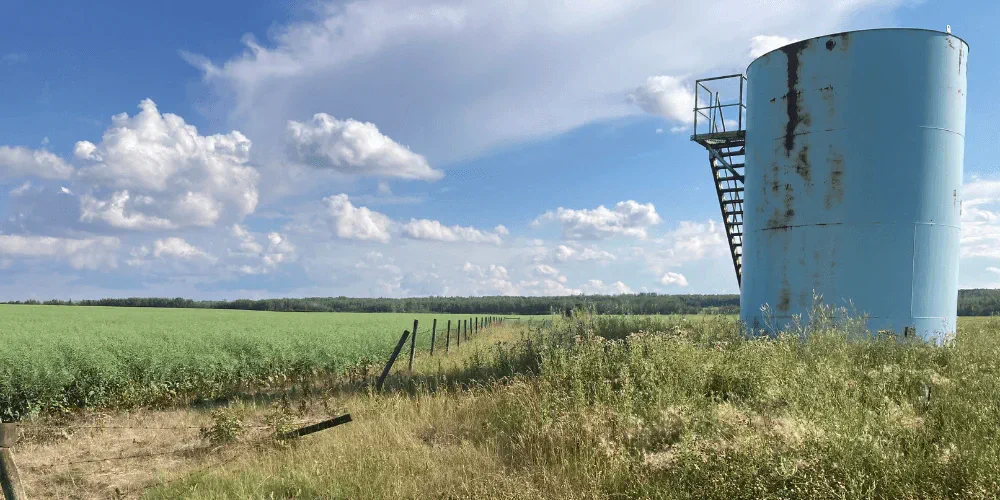
Last week, the Alberta Energy Regulator (AER) ordered Cycle Energy to close 36 sites across the province. The order comes after the company was determined to be financially insolvent and not following previous AER orders.
Cleanup for the sites Cycle will abandon is estimated at over $2 million.
The company was given two weeks to abandon the sites after the delivery of the notice. If they lack the funds to seal the sites, ensuring that they do not leak methane and harmful gasses into the atmosphere, cleanup will fall to the Orphan Well Association (OWA). Critics say funds raised by this industry-funded non-profit currently fall over a billion dollars short.
“Tired of running after these guys”
When Frank Cholak heard the news that the wells would be closed down, he had mixed feelings. Before the AER decision, he had been trying for years to get the licenses pulled for the sites on his farm in Lamont County. He told TheRockies.Lifethat he was “tired of running after these guys” in an interview.
“These guys are walking away from about $2.7 million worth of reclamation costs,” he said*.* “And that’s how easy it is. Just say you’re broke and you have no consequences to clean up and reclaim anything.”
The wells on his farm were drilled in the 1970s, and in recent years had been sold and resold to a string of oil companies before landing in Cycle’s portfolio. In the interim, companies weren’t paying their bills, nor were they removing the noxious weeds on the plots.
Cholak is now waiting to see what will happen to the site on his property.
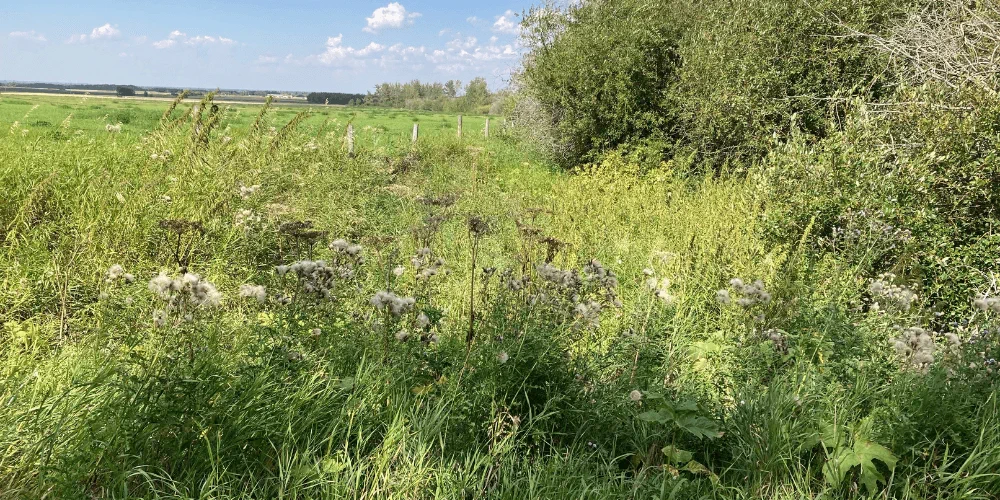
One of the two Cycle sites, thick with Canada thistle | Frank Cholak
The weed problem
Landowners and lease holders in Alberta must ensure that noxious weeds on the land they lease are removed. Once these weeds establish themselves in a crop, they become difficult to control. While Cholak could treat his own farmland, he was not legally allowed on the Cycle sites as they were the company’s rental property.
Earlier this year, Cholak asked Cycle Energy CEO Perry Miller to have the site on his land sprayed on time to protect his crops, as the sites were thick with Canada thistle.
“I asked him for his plan of action because I was trying to be proactive,” Cholak said.
Cholak said he was informed that weed control was not his problem. The site went untreated.
Without any further word from Miller and with no way to enforce the law, Cholak was forced to go to the Lamont County Council Agricultural Services Board to obtain a weed notice, hire a contractor, and have the site sprayed himself, all at his own expense.
He didn’t dare go on the leased site himself, saying that he’d been “chased off” multiple times in the past by energy companies.
“I keep on telling these guys it becomes my business just when you don’t pay your bills. It’s not your land anymore because how can it be your land?” he said. “But I mean the laws are to protect these guys.”
The closure of the sites means the OWA will likely take over and Cholak will have someone to contact in the future about weed treatment. He’s hopeful that farming will be less of a headache now. But he’s also unhappy that Cycle Energy is shirking its responsibilities.
Cycle Energy CEO Perry Miller did not respond to TheRockies.Life’s request for comment on the issue.
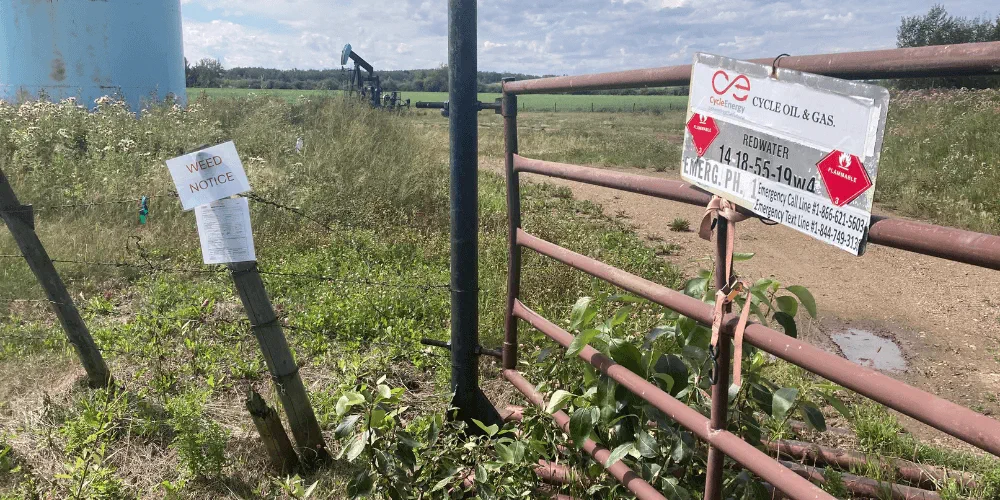
The weed notice Cholak obtained to be able to spray the Cycle site | Frank Cholak
Unpaid taxes
Energy companies have several responsibilities beyond well cleanup and weed control. They’re required to pay landowners for the use of their land based on their surface lease agreements, and to pay property taxes to municipalities and counties where they have sites.
While these responsibilities are written into Alberta law, the rules are seldom enforced. In Lamont County alone, Cycle has nearly $300,000 in unpaid taxes.
For the county, that’s a significant amount.
“Unpaid [oil and gas] can present a significant burden on all our tax base, as we budget annually for everyone to pay their taxes. Because we work to minimize taxes for everyone, it causes an undue hardship to those who do pay their taxes,” Jay Zaal, communications coordinator for Lamont County said in an email to TheRockies.Life.
Over the past six years, Lamont has written off $6 million in unpaid taxes from oil companies. This is money the county would have put toward infrastructure maintenance and powering community centres.
One of hundreds
Through his attempts to deal with the Cycle well on his property, Cholak has been in contact with a surface rights group, the Farmer’s Advocacy Office, and the AER. He said that he is one of hundreds of farmers trying to fight for oil and gas sites on their land to be properly addressed.
“If this is the way the system works, it’s all backwards,” Cholak said. “How can you get away from your liabilities by just saying I’m broke? If I don’t pay my taxes on my land, it goes up for an auction here in three years.”
“But still, somebody’s got to clean all this mess up.”

Frank Cholak takes great pride in having a tidy farm | Frank Cholak